
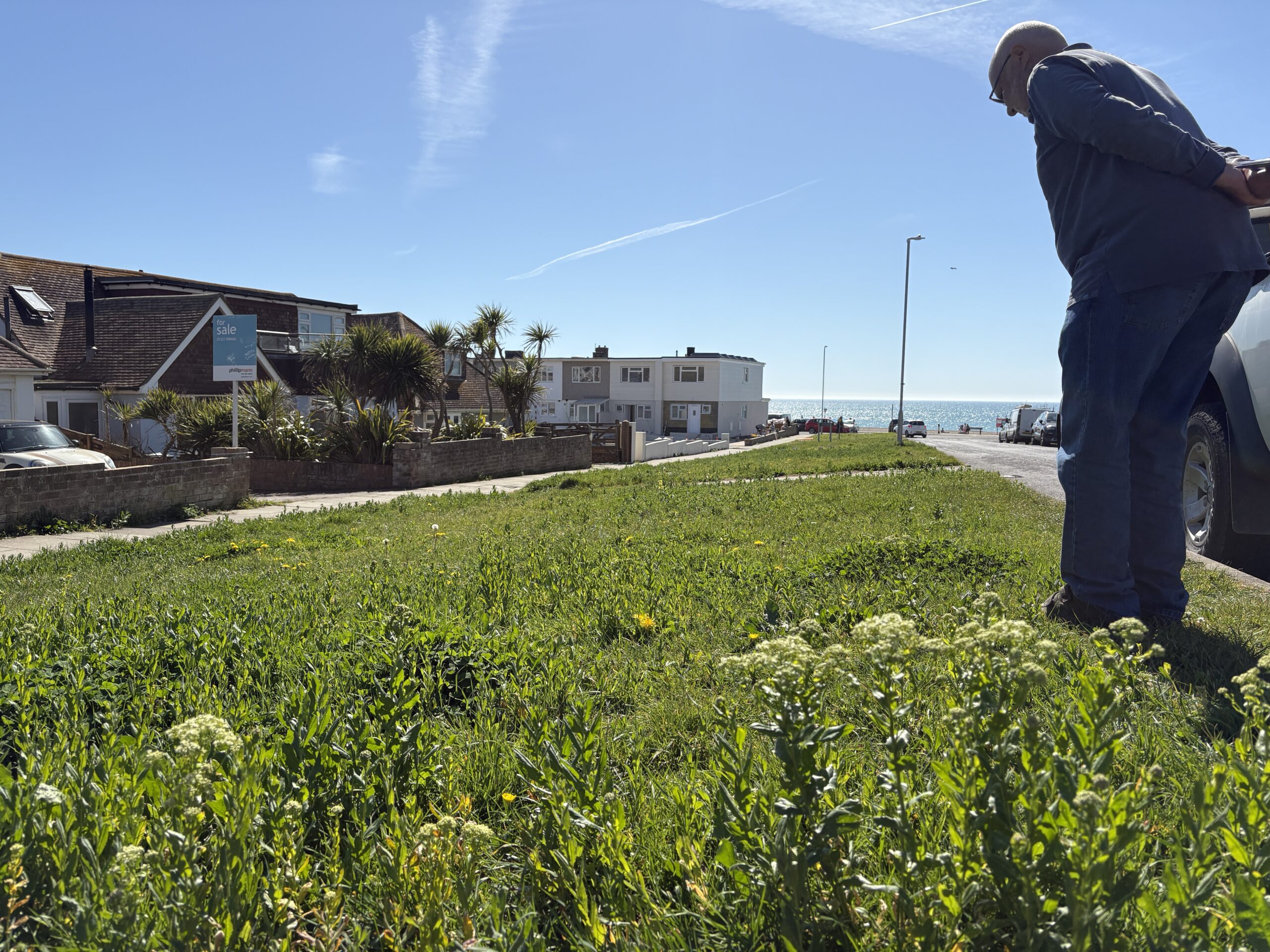
This wildflower wander was in along Edinburgh Road. These verges are managed as wildlife verges.
On 8 April four of us took a wander up Edinburgh Road which runs between Claremont shops and the ice cream van on the seafront. When we first came to look at the flowers in the verges here, the top and bottom verges were designated wildlife verges. This means that they are only mowed in the Autumn and clippings are supposed to be removed, giving maximum chance for flowers to thrive and set seed. Now the entire road is designated so it was going to be interesting to see what was now growing.
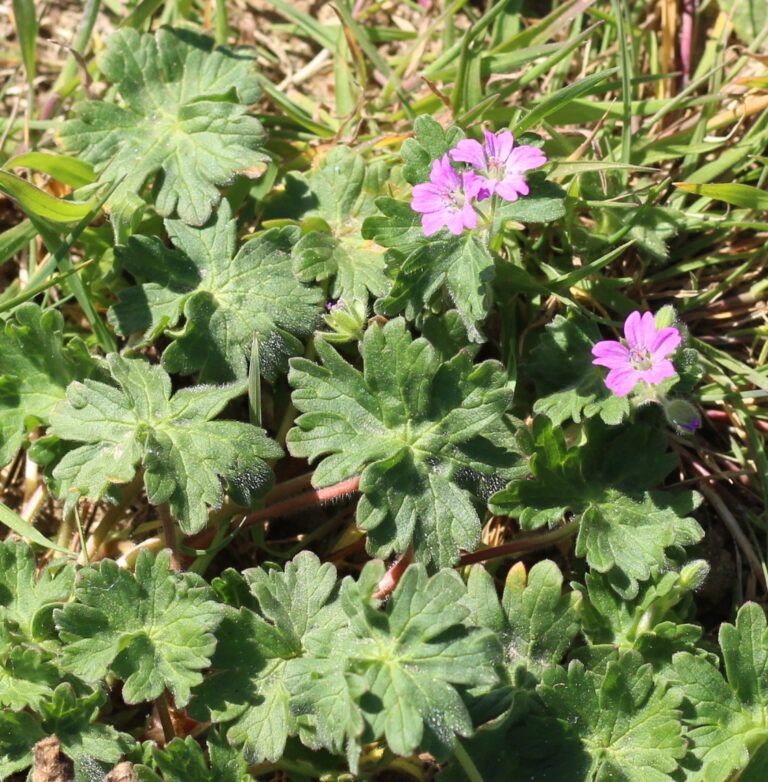
On 8 April we managed to identify 46 species of wildflower in the verges that were either in flower, or easily identifiable from their leaves. The full list is shown below.
The rarest plant in the road is a “Seaford special” called Sea heath which drapes over the kerb at the south end of the road. It also grows in close knit patches clinging the shingle edge, parallel with the Salts. In Summer it has tiny but beautiful pink flowers.
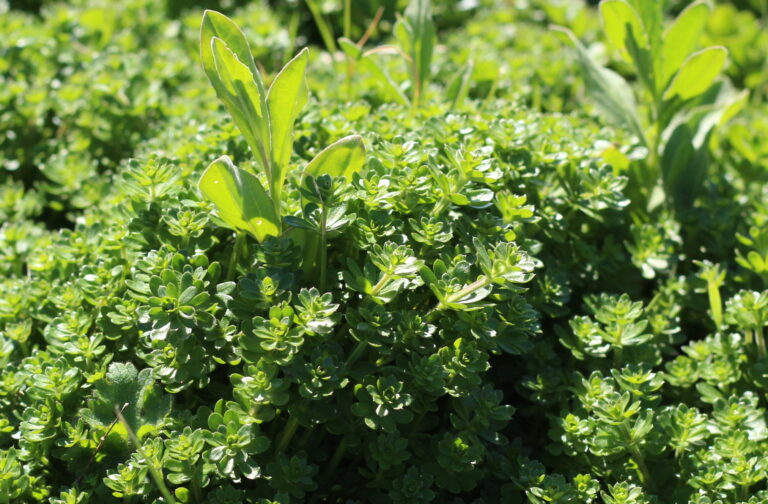
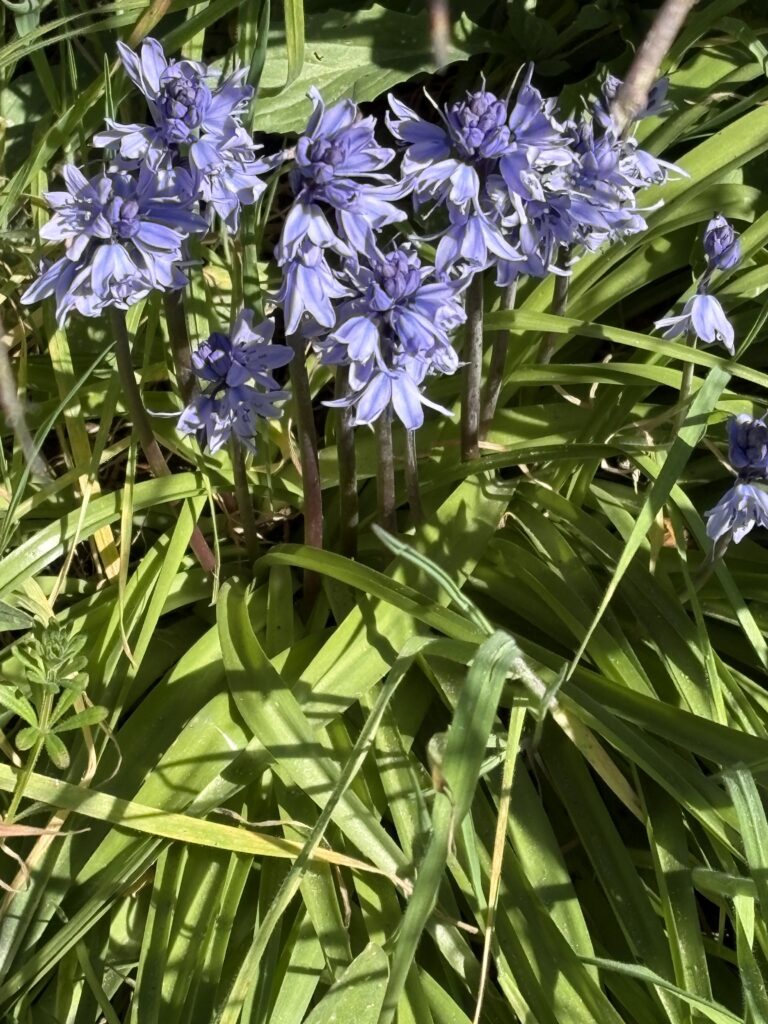
In some of the verges that had previously been cut by now, there were lovely patches of bluebells. Another verge in the middle of the road had a huge patch of bedstraw leaves probably Hedge bedstraw, though we would like to go back and check when it starts to flower. These are in the same family as Cleavers (Goosegrass/Sticky willie) which are the sticky “weeds” that seem to be everywhere just now! With the Bedstraw family note the leaves which radiate in whorls from the stem which have four sides.
It was also great to see Alexanders in full flower and cow parsley coming up, also burdock leaves. These are all great plants for attracting insects.
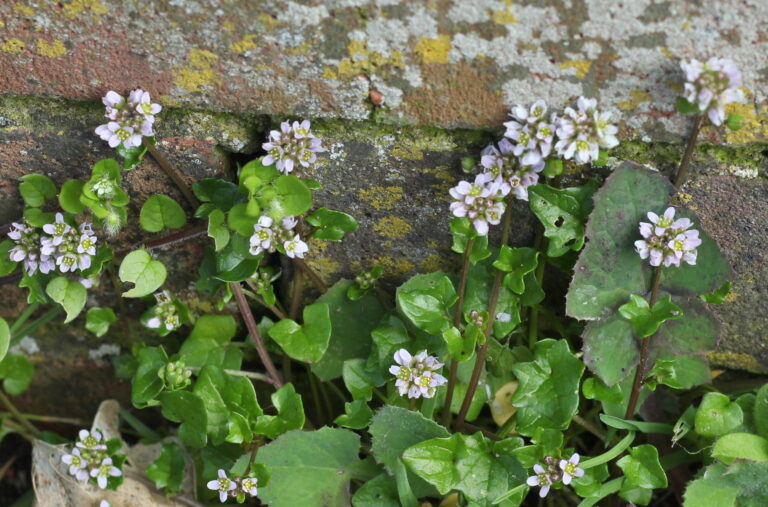
A rather less welcome plant was Hoary cress, which is a rather invasive plant that is popping up along many verges in Seaford this time of year. This spreads easily along salted roads as does another rather more delicate flower, Danish scurvygrass which has ivy shaped leaves and again clings to pavement cracks, and shingle patches on the beach.
At the top of the verge is a lovely sunny bank where Red valerian was starting to flower. This pretty plant also comes in white and pink and is a favourite nectar plant of the Humming-bird hawkmoth. Hoary ragwort leaves were also appearing. Ragwort supports many insects, some which rely only on ragwort.
Bizarrely at the top near the community garden we also spotted many bunches of Chives growing in the grass!
This was one of our wildflower wanders (which are often on Wednesdays) If you’d like to come along do get in touch.
If you live near this road we would love to hear from you if you would be interested in keeping an eye on these verges and reporting new species back to us.
Judy (Seaford Action for nature)
safn@renaturingseaford.org