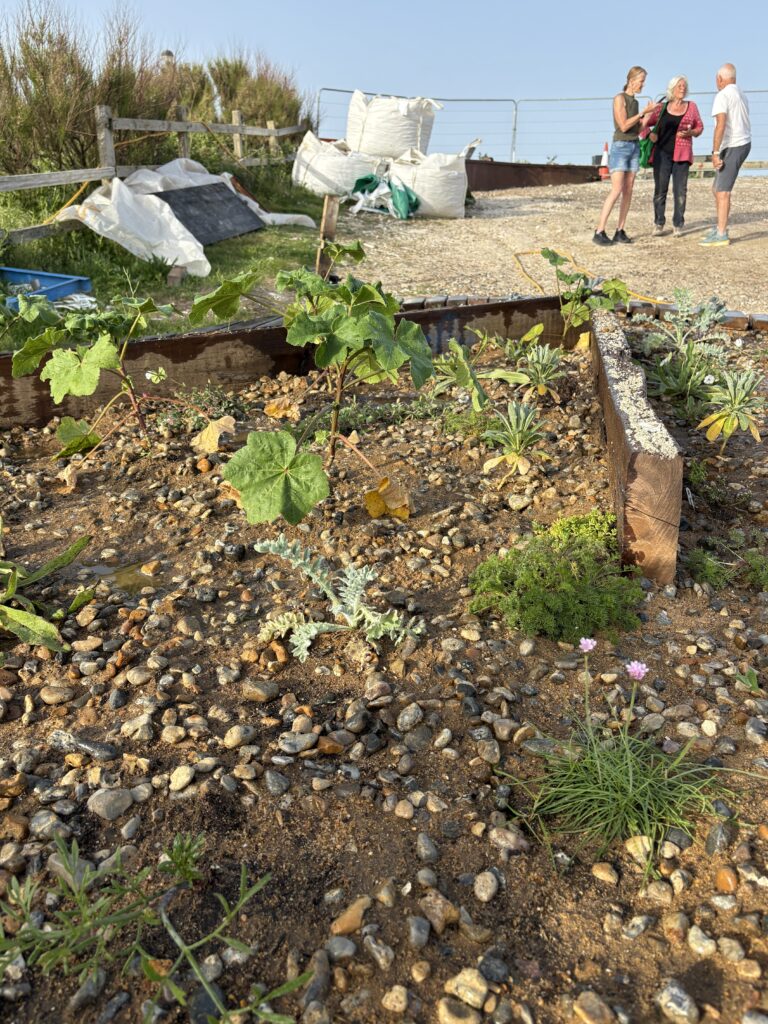

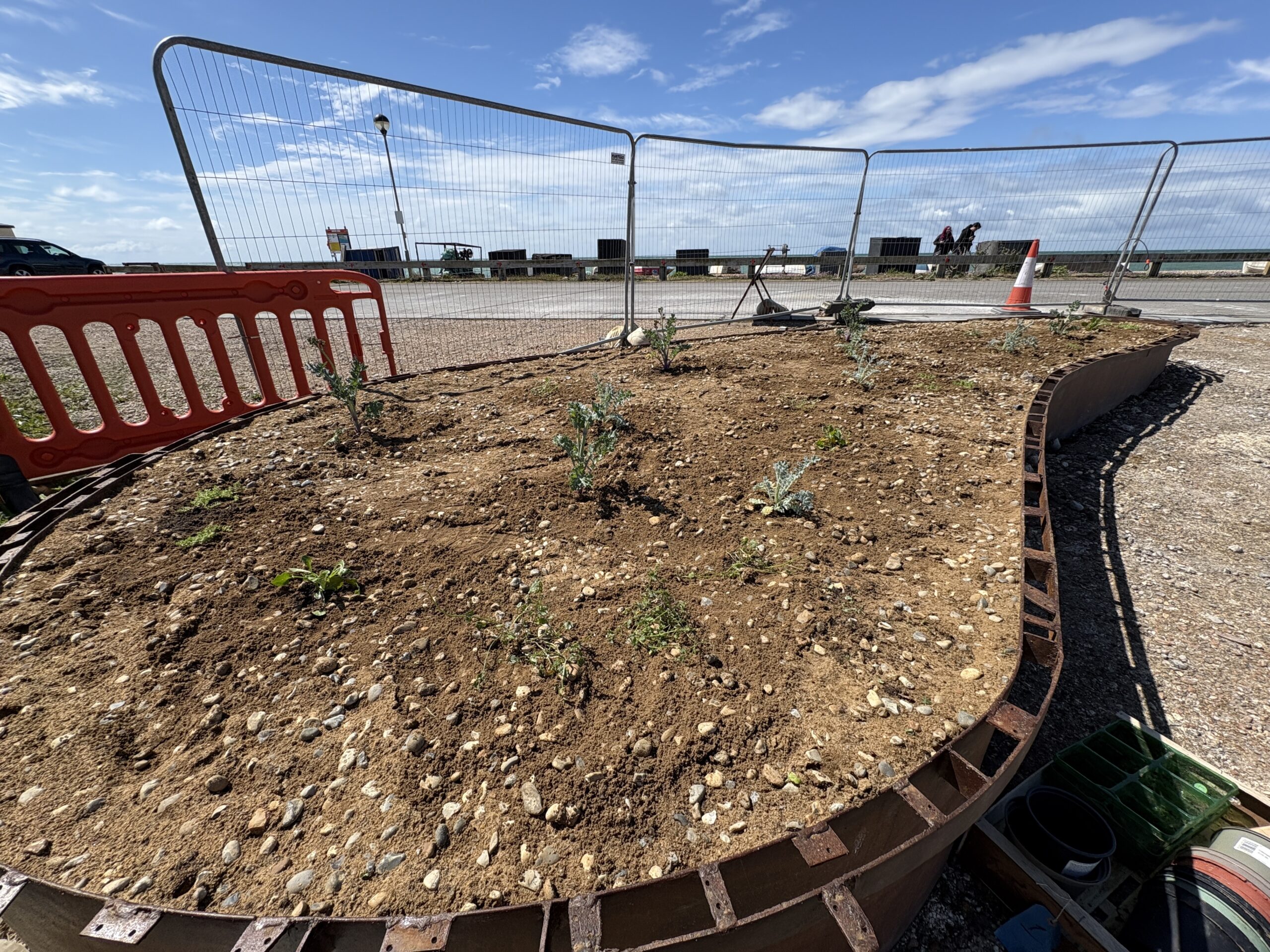
I was delighted this week to be part of the group of volunteers planting up the new Cliff Gardens community garden at the eastern end of the seafront.
Plant survival against the odds
These are not your standard flower beds, so often filled with disposable bedding plants. These new beds in Cliff Gardens will tell an important story which will be revealed soon on information boards. The plants and ecosystems in the beds will undoubtedly evolve, and teach us even more about our environment and the creatures that can survive here.
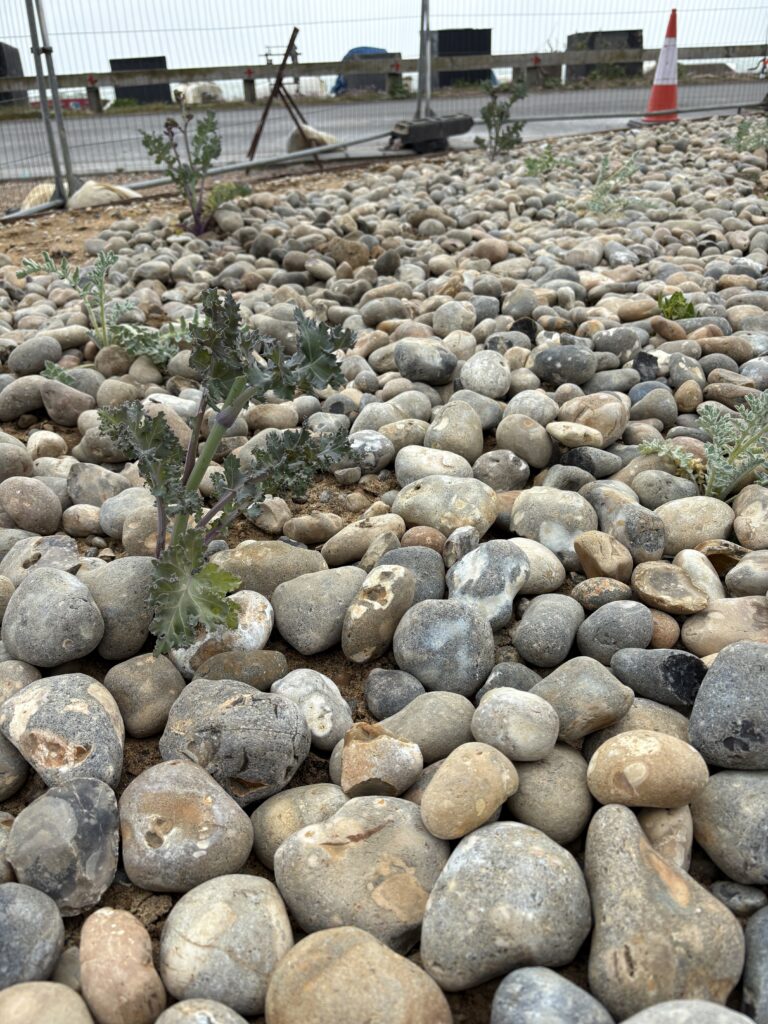
Each bed will have a different theme, something to teach us about plants and their habitat, and has a different mix of growing medium and plants. Regular volunteer Peter and I planted up beds 1 and 2 which are a showcase for the plants that can thrive right at the edge of the beach/shoreline. These are planted into a sandy subsoil and will be covered in shingle. These plants have to withstand salt, sea water, harsh winds, blazing sun, lack of soil nutrients and constant shifting of shingle during storms. Many of the plants being planted here can often seen at the far end of Tidemills towards Newhaven. Vegetated shingle is a hugely important and rare and fragile habitat. At the Splash Point end, few plants flourish at this end of the seafront because of the constant shingle drift during storms, and the twice-yearly shingle shifting by Environment agency trucks!
Bed 1 – The Shingle colonisers
The plants that survive on the shingle beach are specialists that have adapted in different ways to survive, and together create a precious habitat.
Shingle consists of pebble stones of various sizes and sand which is derived from ground down flint stones and chalk. It contains no SOIL or humus for plants.
Sea kale is a spectacular plant that has extremely deep tap and sturdy tap roots which help the plant find water and nutrients deep below, with rootlets than fan out to secure the plant against the wind.
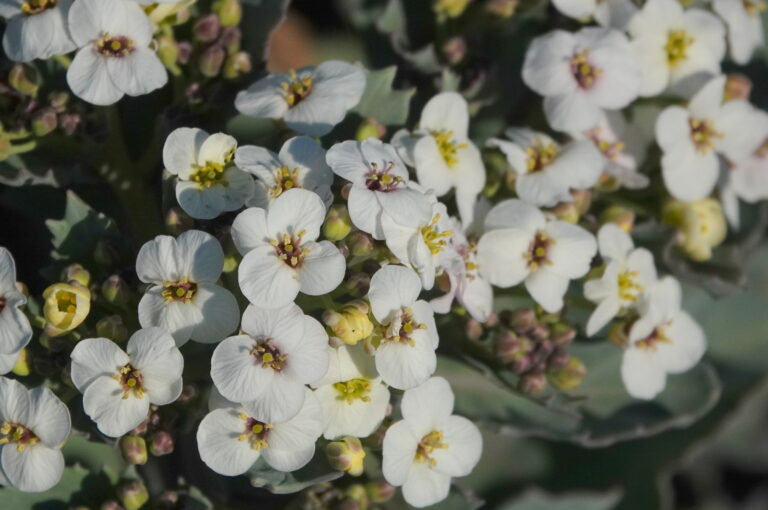
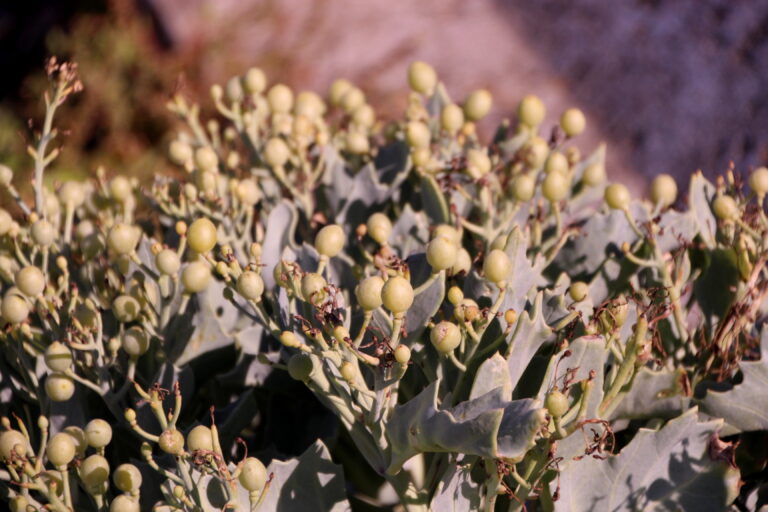
It also has leaves that are not only waxy to conserve water, but curled and contorted in such a way that the leaf collects rainwater which trickles down to the roots. In May the lovely honey scented mass of flowers attract a wide range of pollinators, and flower heads turn into marble like seedheads. Later these seed heads dry out and form a tough outer coating that can survive the ravages of Winter, and can even float – allowing them to colonise in a new location! Often in Winter the plants seem to disappear as only the tap root will be left. In Spring this starts to send up shoots of purple and burgundy from the bare shingle and the cycle starts again.
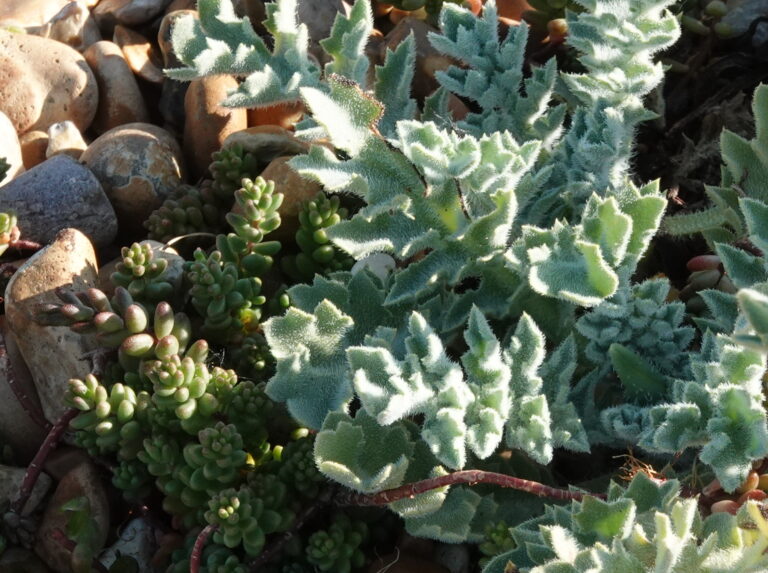
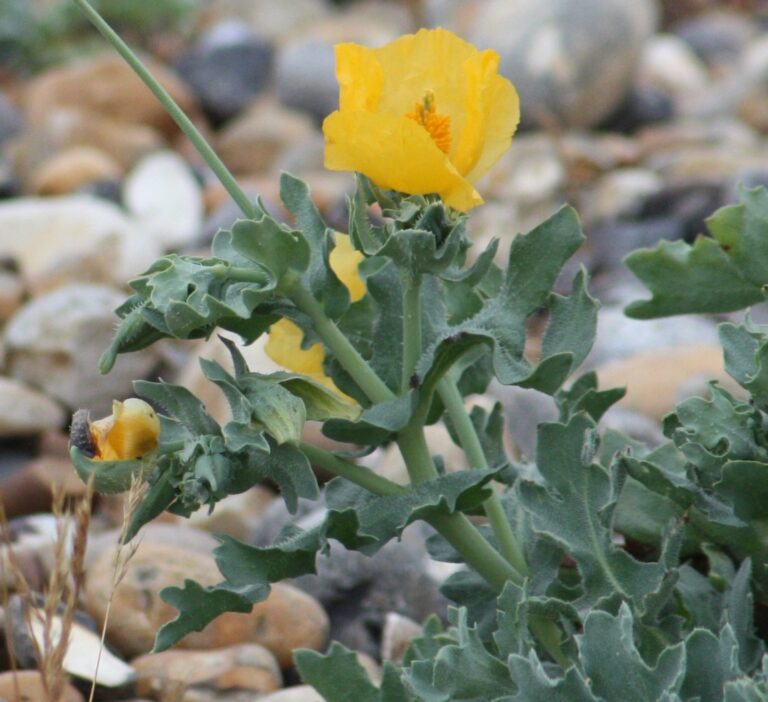
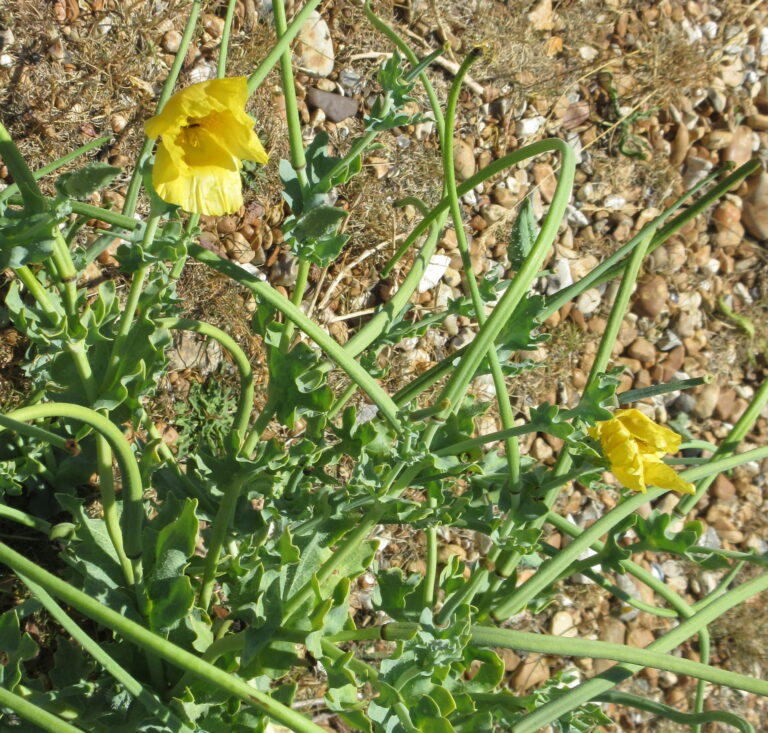
Yellow Horned-poppy is another plant well adapted for life on the edge. It gets its name from its seed heads which become long curling horn shapes. As these ripen they darken and rip open as they roll along the shingle dropping seeds as they go. The leaves can look very different at different times of year. In winter they form neat rosettes of foliage, covered in stiff white hairs, lying flat and furry against the ground. As the plant grows in Spring the leaves turn blue-green with the protective white hairs still visible over leaves, stems and buds. Finally beautiful golden poppy flowers appear that somehow seem too fragile for this harsh landscape, but still manage to bloom! Such a wonderful sight.
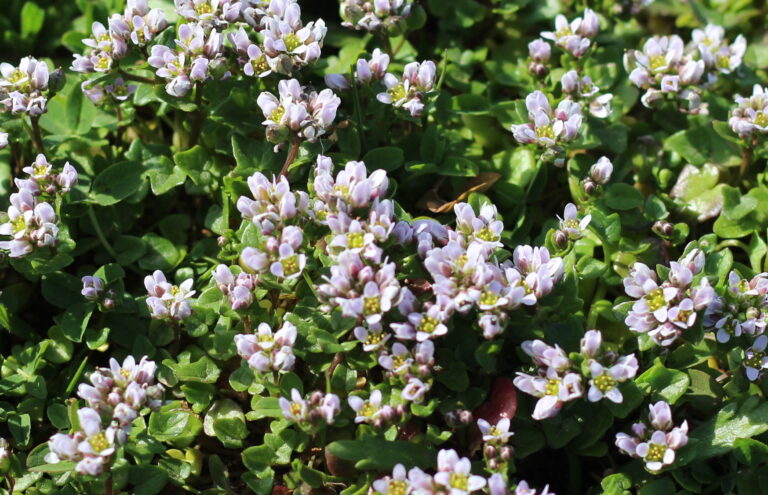
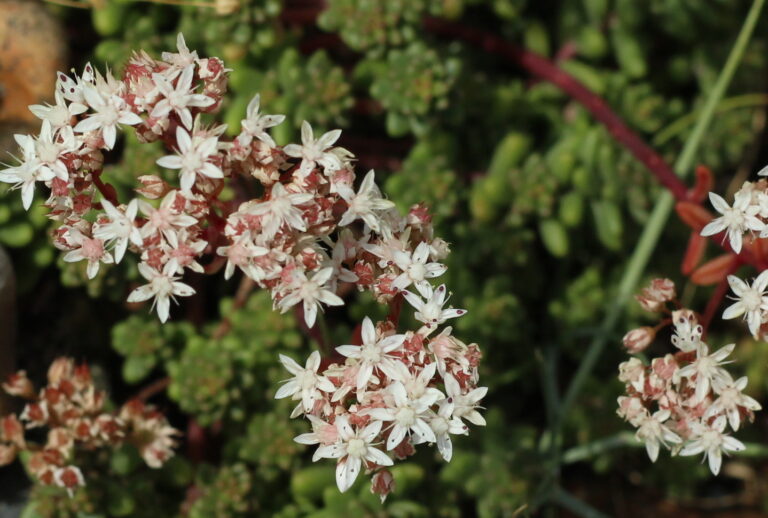
Stonecrop and Danish scurvygrass are two plants that grow low to the ground for protection. You can often see Danish scurvygrass on the edge of pavements and roads that have been salted, but the very prettiest ones I’ve seen thriving in Seaford are in their preferred natural habit – on the beach shingle! Like all flowers in the crucifer/cabbage family they bear cross-shaped flowers and the plant is full of vitamin c (once used by sailors to avoid scurvy!) There are several types of Stonecrop you can see locally at Tidemills. English stonecrop has white flowers and Biting stonecrop has vivid yellow flowers. Again these seem most at home scrambling over the shingle where they get full sun.
A battle over adversity
While these tough and resilient plants fight for survival, credit should be given to the volunteers who over many years have worked to make this fantastic project actually happen. They have needed huge amounts of patience, tenacity and determination. The team have given up hours and hours of their time to get the project from an idea from local residents, to get to this wonderful moment when we are gently bedding in plants with love and hope.
There have been enormous hurdles to get past, and the amount of time working with councils and other stakeholders should not be underestimated. The team have navigated planning regulations, including a full public enquiry into closing the road. Applications for funding, and working with funders can be complex and time consuming.
The planting plans have been carefully researched, and all the plants meticulously chosen, sourced or propagated and grown or cared for locally.
Managing the contractors, artists, partners and volunteers at the site, must also have been a challenge.
I understand that advice has been taken from experts at Wakehurst, though in Seaford the team are delivering a coastal garden project that Wakehurst could not – because we have the climate and conditions to make it work.
Thanks
I would like to thank the group for all their incredible hard work, and for letting me help with the planting at this pivotal moment.
As a cyclist I much appreciate the new shared path which is a considerable improvement on the bumpy old track. As a local resident and plant enthusiast I’m going to love seeing how the garden develops into a real asset for our town and its visitors. While planted, we lost count of the number of people passing by who stopped to say how wonderful it all looks!
The garden will be tended by an enthusiastic group of volunteers who will help with watering, weeding and other tasks. If you would like to join them, please contact Matt on volunteer.cliff.gardens@gmail.com
The group hope that all work will be complete on the site, and a new footpath laid in time for the Summer holiday so that everyone can visit the garden. I for one can’t wait!
Judy
Sources
“Seaside flower of Rye Harbour” by Morgan and Yates
Links
https://sussexwildlifetrust.org.uk/news/living-on-the-edge-vegetated-shingle
https://www.buglife.org.uk/resources/habitat-management/coastal-vegetated-shingle/