I was delighted to hear that St Leonards church in Seaford was taking part in “Love your burial ground week”
This is a celebration from 7th-15th June launched by Caring for God’s Acre.
This encourages congregations of local churchyards and cemeteries to celebrate these lovely places in some way in June.
Churches count on nature 2025 runs at the same time and focuses on the brilliant wildlife to be found in churchyards. (This is a joint initiative by Caring for God’s acre, the Churches of England and Wales and A Rocha UK.)
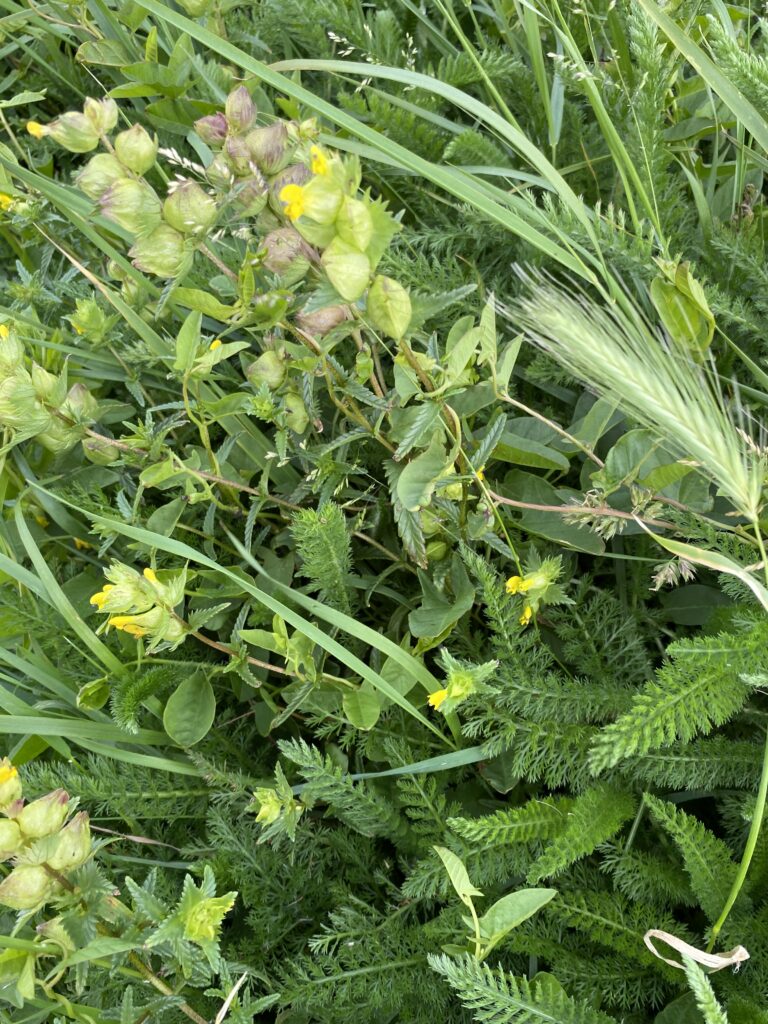
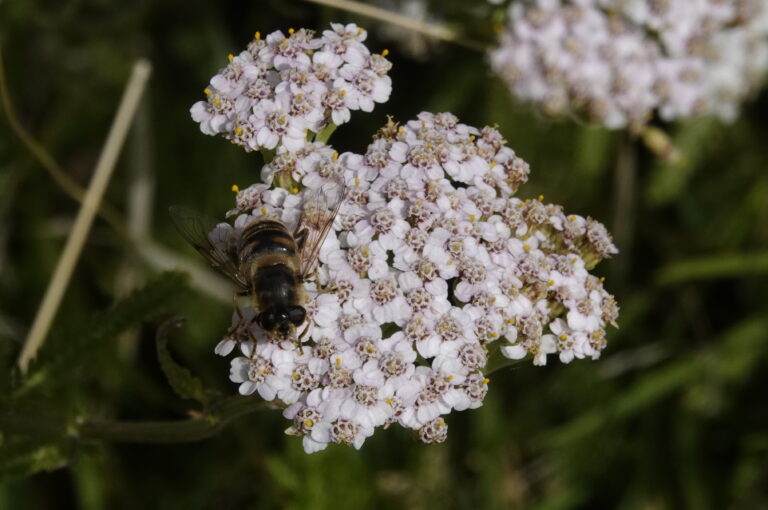
I took a walk around the Churchyard of St Leonards to see what flowers I could find. It wasn’t great weather for insects unfortunately, with wind and rain threatening, but there were still birds including goldfinches with their twinkling songs coming from the trees.
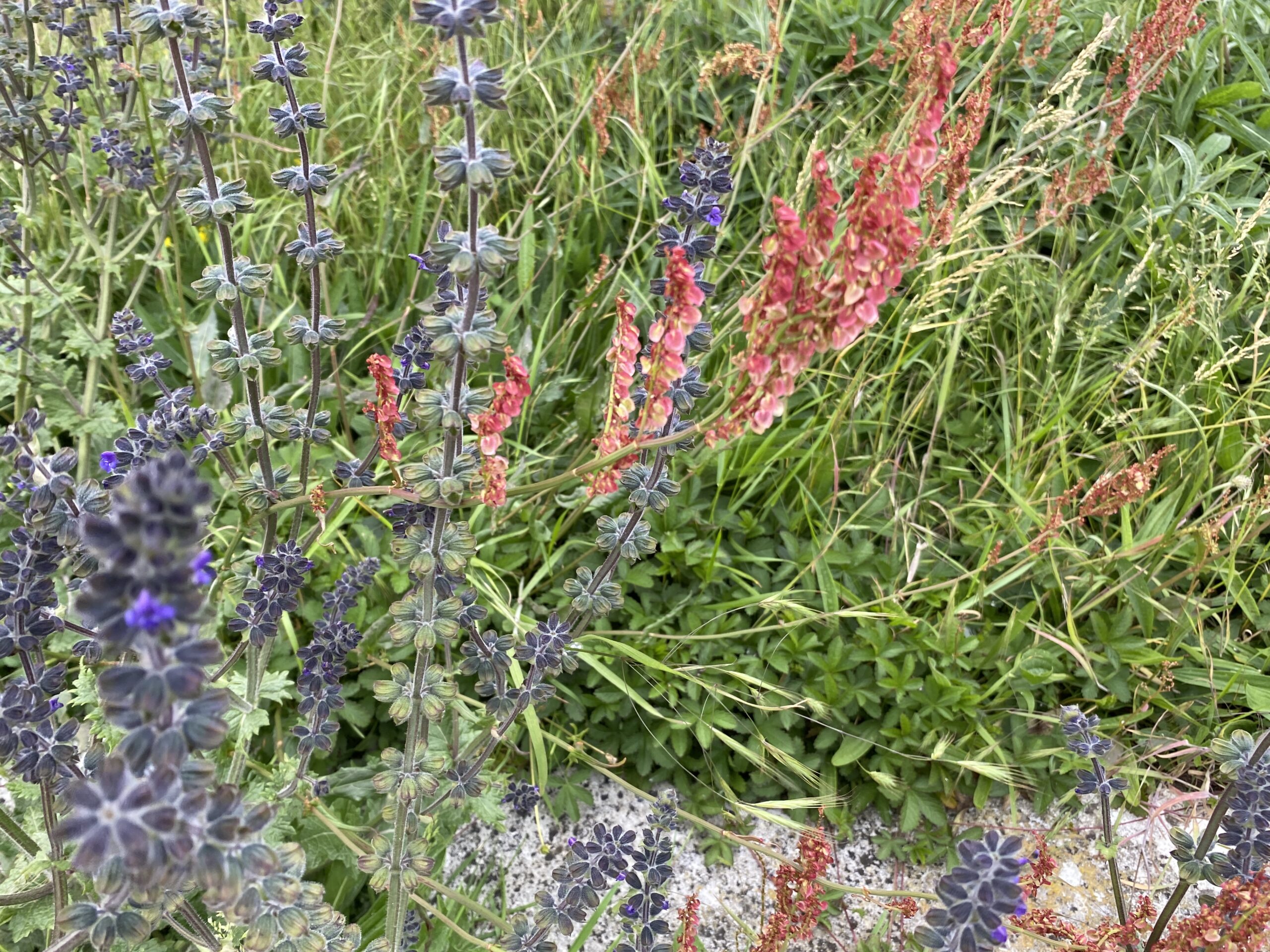
For me the highlights were the wild clary, which is one of the Seaford special plants, quite common here, but not widespread in the county. It’s a salvia, very much like garden species, with lovely blue flowers that the bees love. You can also see it along the side of the Martello fields in the unmowed margins. That batch has pretty much gone to seed, but I recently spotted linnets feasting on the seeds!
Another great plant is the sorrel, which looks a bit like a grass from a distance but has stunning little red seeds beautiful up close, and often putting on a glorious red display when growing en-masse, such as Southdown corner.
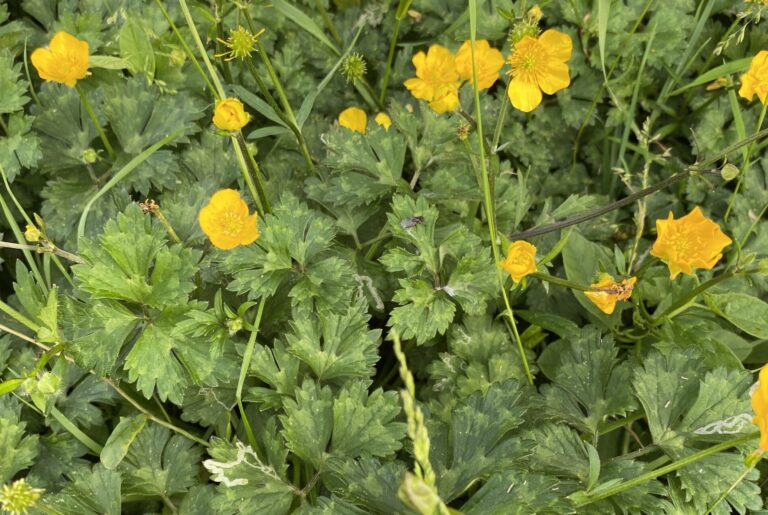
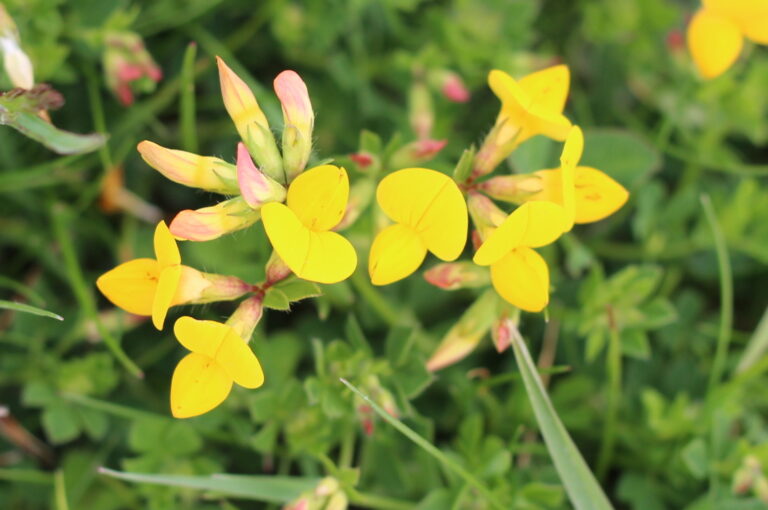
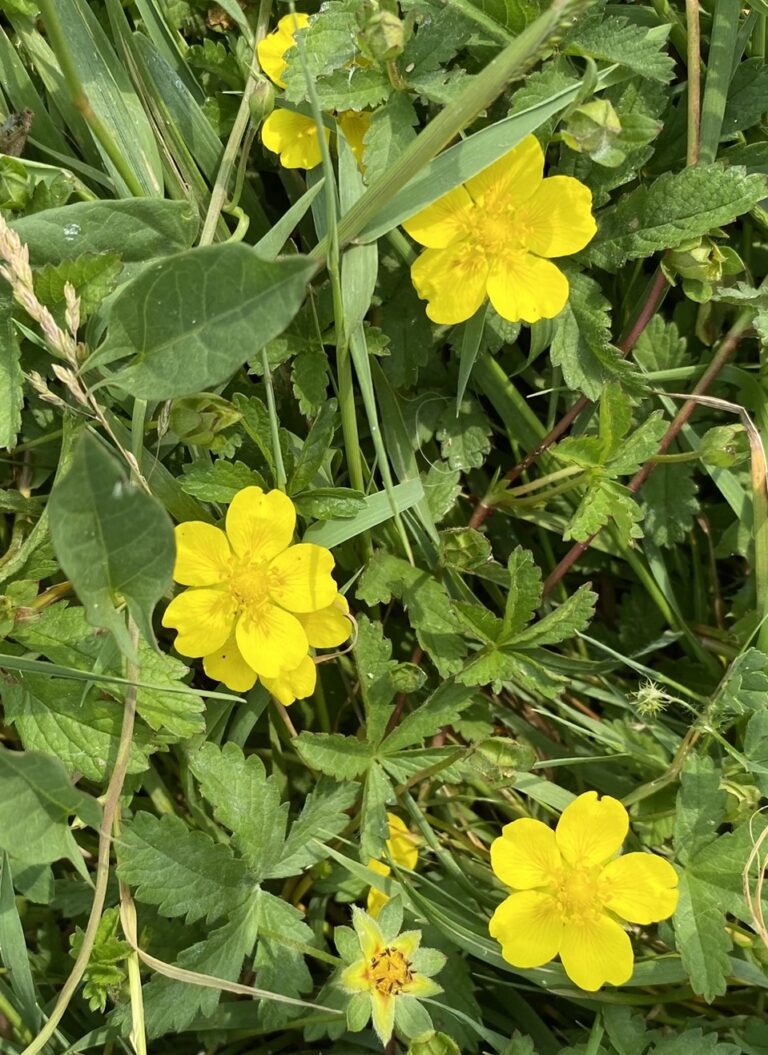
There are several cheery plants such as creeping buttercup and the rather similar creeping cinquefoil. Masses of ox eye daisies and grasses were swaying in the breeze too. Another bright yellow plant is birds foot trefoil which is an important food plant for several types of butterfly. There was a lot of a long grass, and clearly some of it was due a cut. Not only would this make it easier for people to see the gravestones, but also there are some flowers such as medicks and cranesbills that flourish in shorter grass, and ground nesting bees that really need access to some bare soil.
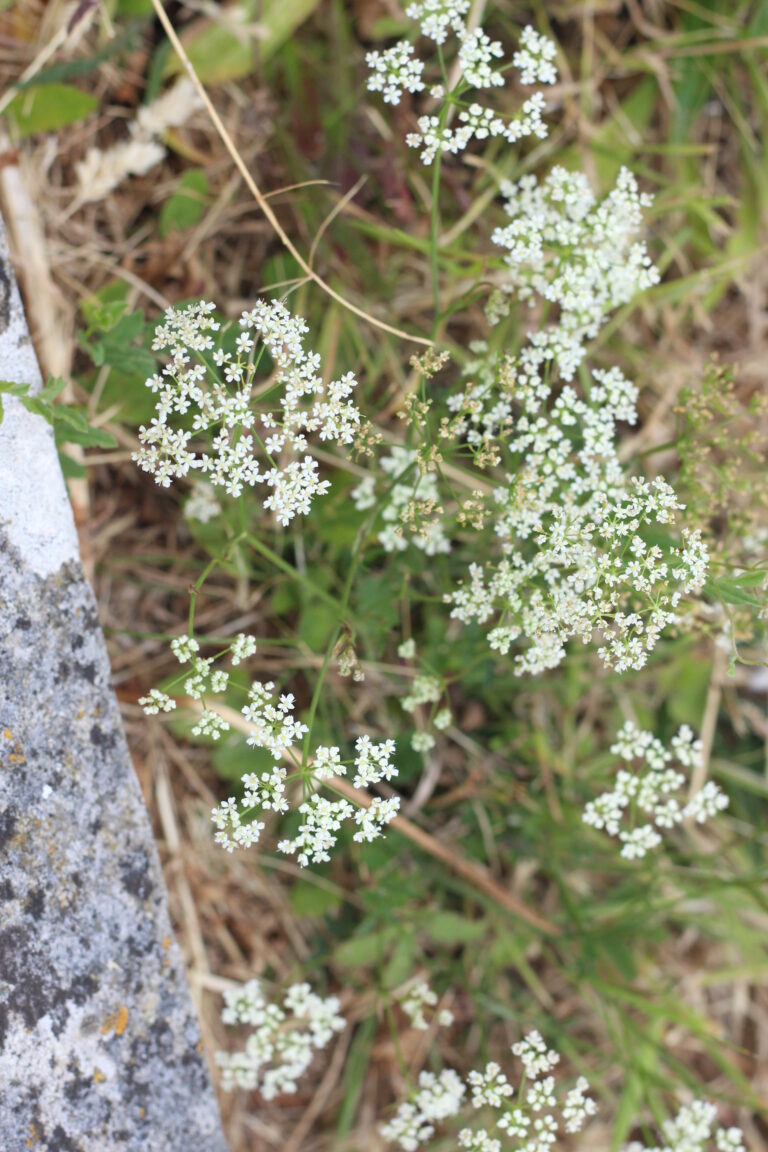
Some flowers like the cow parsley had pretty much finished flowering, but you could still find some of their double flat headed seeds, with little tufts at the top, and frills (bracteoles) at the bottom. Worth keeping an eye out for is the burnet saxifrage which is often growing here. It’s shorter and more delicate, with no bracteoles and leaves and seeds different to the cow parsley.
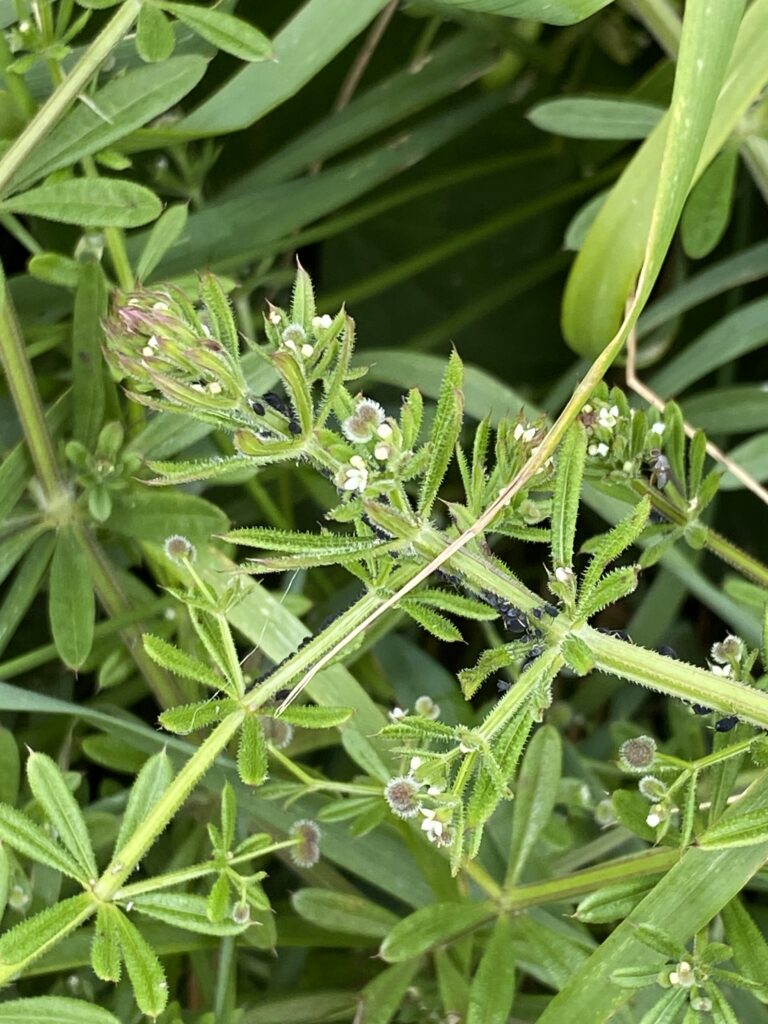
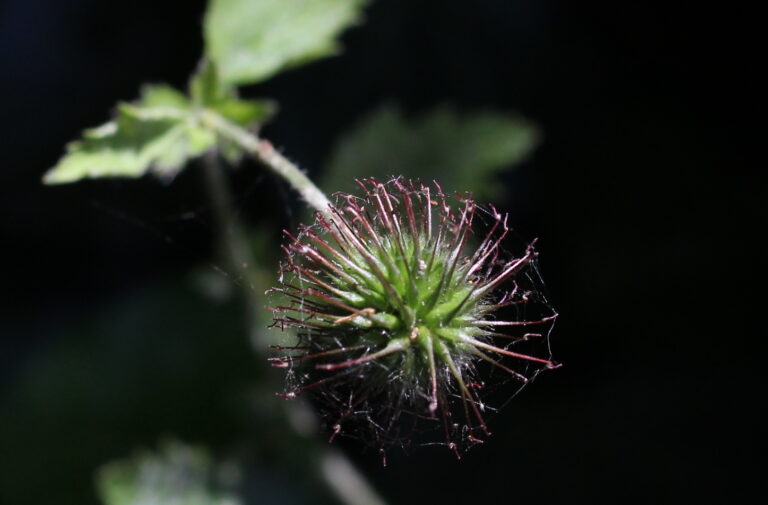
Some plants want to leave with you! The leaves and seeds of cleavers have lots of tiny hairs which make them sticky enough to stick to you, or your dog. Wood avens too, a woodland plant has incredibly intricate hooked seed heads, which help the burs hitch onto passing people to spread their seed far and wide.
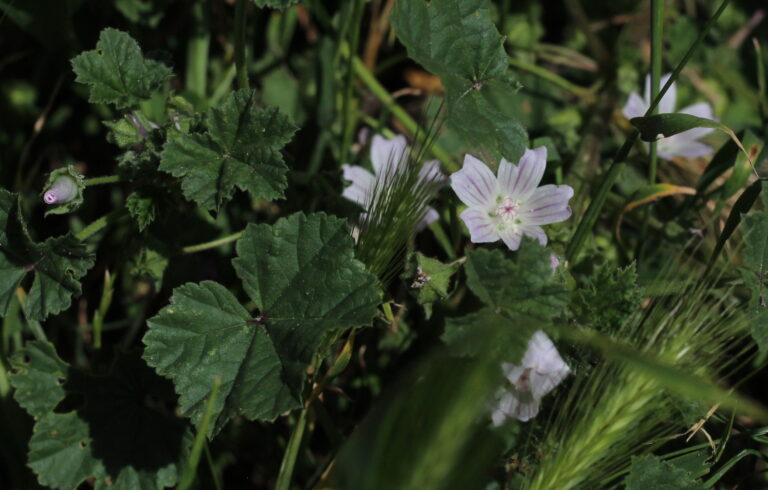
I was looking for mallow, as there had been some dwarf mallow growing here in the past. There was a patch of possible leaves, so will have to watch that space, if it can avoid the strimmers when they arrive. Dwarf mallow are different to common mallow with paler flowers and leaves that are less indented.
Don’t forget the Seaford Natural History Society are running an evening event here on 26 July. I wonder what wildlife they will spot!
My total plant list for this short visit was:
1 | Bird’s foot trefoil |
2 | Bramble | |
3 | Bristly oxtongue |
4 | Buck’s horn plantain |
5 | Cleavers | |
6 | Common mallow |
7 | Common nettle |
8 | Common ragwort |
9 | Common sorrel |
10 | Cow parsley |
11 | Creeping buttercup |
12 | Creeping cinquefoil |
13 | Daisy | |
14 | Dove’s foot crane’s bill |
15 | Dwarf mallow |
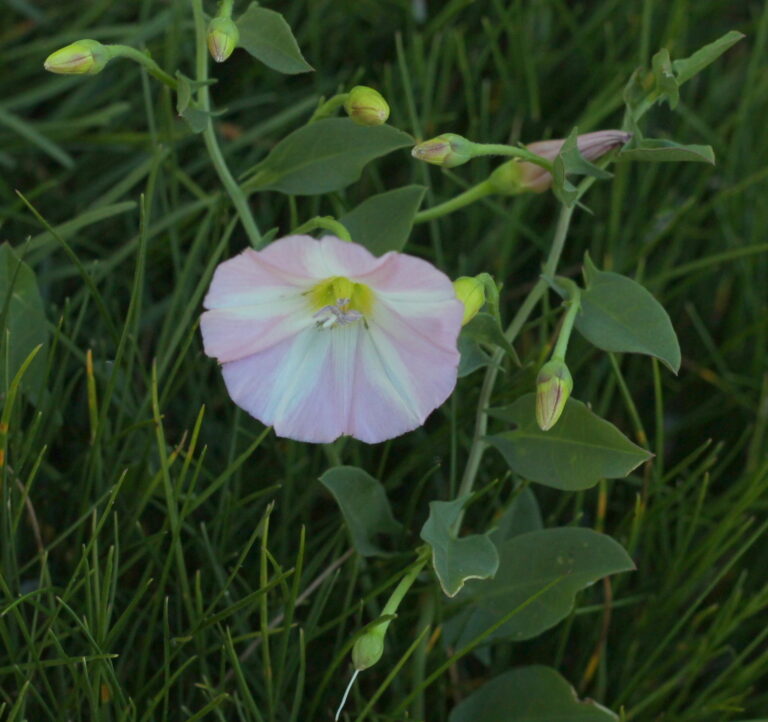
16 | Field bindweed |
17 | Groundsel |
18 | Hollyhock |
19 | Ivy-leaved toadflax |
20 | Lesser Swinecress |
21 | Old man’s beard |
22 | Oxeye daisy |
23 | Pellitory of the wall |
24 | Red clover |
25 | Ribwort plaintain |
26 | Smooth sowthistle |
27 | Spotted medick |
28 | Stinking iris |
29 | White clover |
30 | Wild clary |
31 | Winter heliotrope |
32 | Wood avens |
33 | Yarrow | |
34 | Yellow rattle |
It was lovely to bump into Lucy the vicar. We were both wandering around in the long grass taking photos of flowers with a phone! All sightings are being reported via irecord, which builds up an invaluable record of just what thrives in our churchyard green spaces. Do get involved if you can, you can find out more about this one in the church magazine, and other churches will also be participating.
These are such a valuable habitat in our towns for wildlife, and a lovely peaceful place to find some joy and solace in our busy lives. Enjoy!
Judy (Seaford Action for Nature)