
Why do we carry out surveys here?
Surely, you might ask, there are more interesting places to survey the wildflowers. We are after all surrounded by nature reserves and fantastic countryside. Why are we going back again to look at flowers in a public recreation ground?
Our public parks are often more accessible than the countryside with parking or public transport nearby and less need to leap over any stiles or squeeze through gates! We also suspect that they are generally overlooked and under recorded with keen naturalists heading for the South Downs National Park, Tidemills or other nature reserves.
Wildlife need corridors. Not the ones inside buildings but green corridors of habitats in parks, gardens and verges that help our wildlife get between the green spaces. These are essential, for food, for habitat and for reproduction. That might be a ground nesting bumble bee emerging from the ground and searching for nectar, a hedgehog walking up to a mile each evening to find insects and worms, or the swifts that have been soaring above our heads the last couple of weeks as they feast on flying insects before they are strong enough to start their journey all the way back to Africa.
Personally I love to see wildflowers wherever they appear, even the cracks in the pavements! Learning about wildflowers can be an addictive hobby, and we are all adding to our knowledge all the time! Plants are easier to examine and photograph than wildlife as they can’t run/fly away! We love sharing our knowledge with others, and always welcome volunteers, whatever your botantical experience.
For people, for wildlife
Our green spaces are crucial for us too, giving space for organised sport and exercise, essential for walking for people and dogs, and general outdoor recreation which is proved to improve our mental health and make us happy.
Even in a busy park there are sections that can be given over to wildlife. One good way to do this, is to ensure that some areas of grass are managed as meadows, ie allowed to grow long all Summer, and not cut until Autumn.
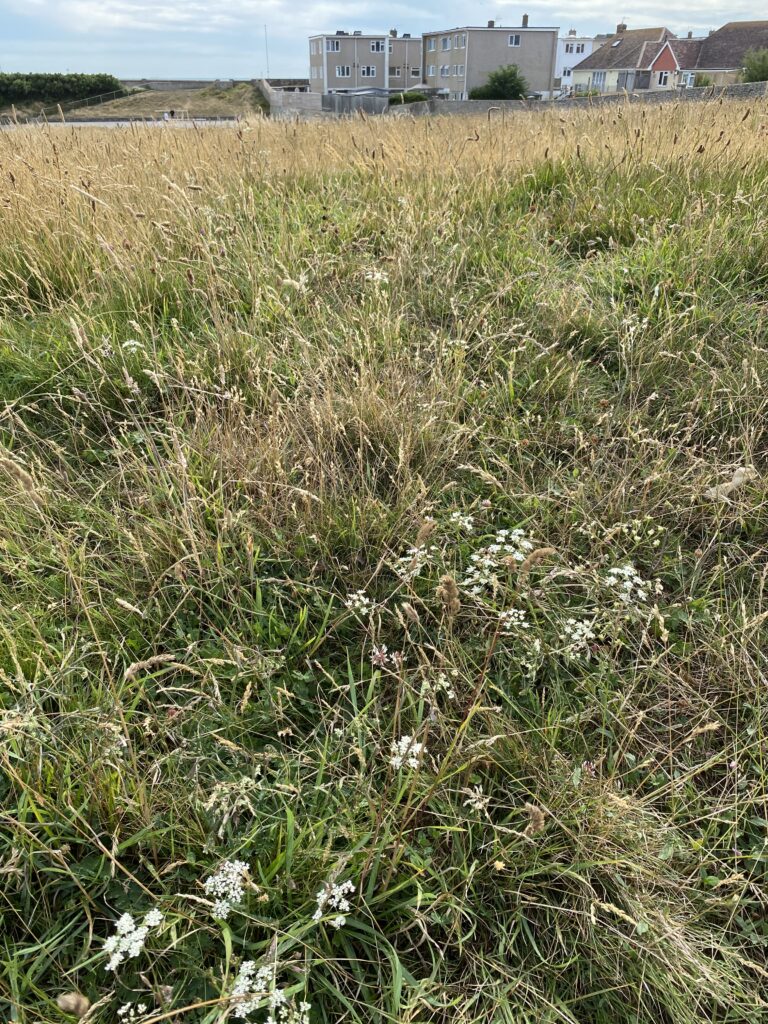
In the Salts there is quite a varied range of terrain, with hollows and bumps joining curved grassy areas, shady edges and steep banks. Different areas attract different plants.
Managing the fields as meadows results in a great diversity of plant species, and hence a greater diversity of insects, birds and mammals. It’s fascinating too how the variety of flowers and their size, vigour and visibility depends on so many factors from year to year. Rainfall, temperature, the mowing times, the surrounding grass length, the time that seeds lie dormant before emerging etc etc.
Seaford Action for Nature is delighted that Seaford Town council are committed to tackling climate change, and especially to increasing biodiversity in our green spaces.
Is the current mowing regime encouraging biodiversity?
We hope so but need evidence. That’s why we need survey data, to see how well we are doing, and whether the mowing/maintenance plans need to be adapted.
We were delighted to welcome Amy from Seaford Town Council along to our annual survey!
How did we do it? How many varieties of flowers were there?
Three areas of the Salts were surveyed by two teams. We surveyed the north west corner both sides of the path, and the steep banks on the northern side of the sports field.
In total there were 55 species found. The maximum in each of the three sections was 34. This makes 79 species in total to date and included 17 species not recorded here before.
What were the highlights and challenges?
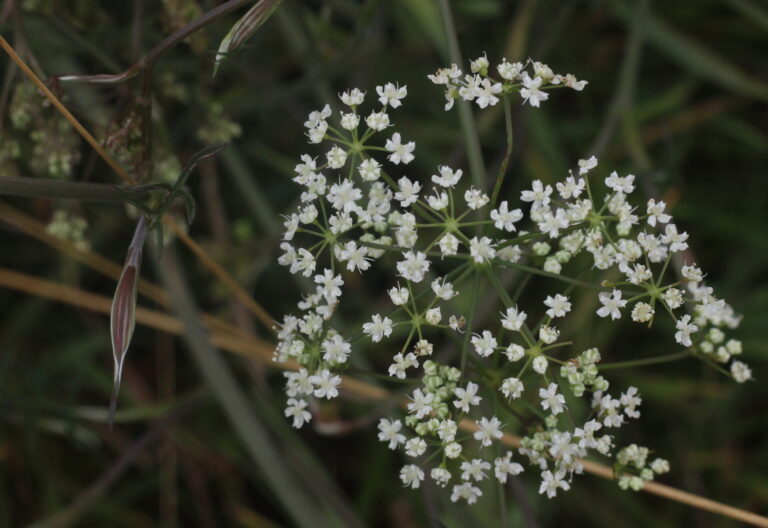
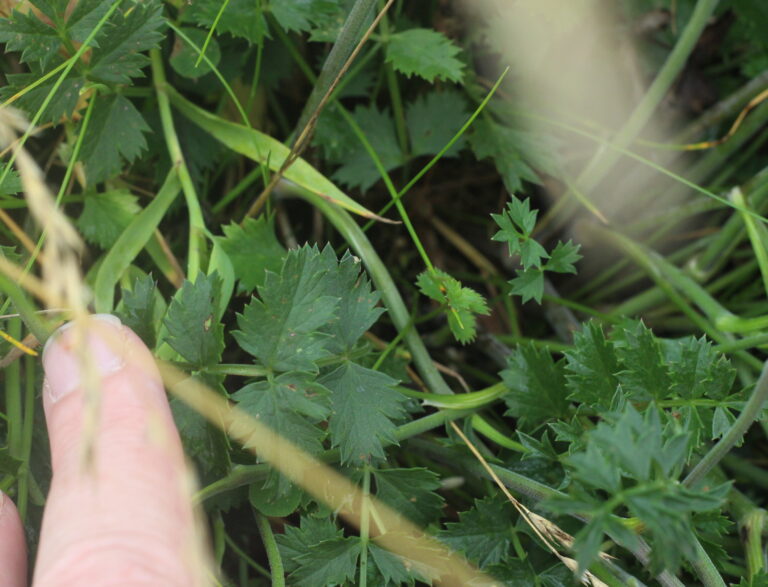
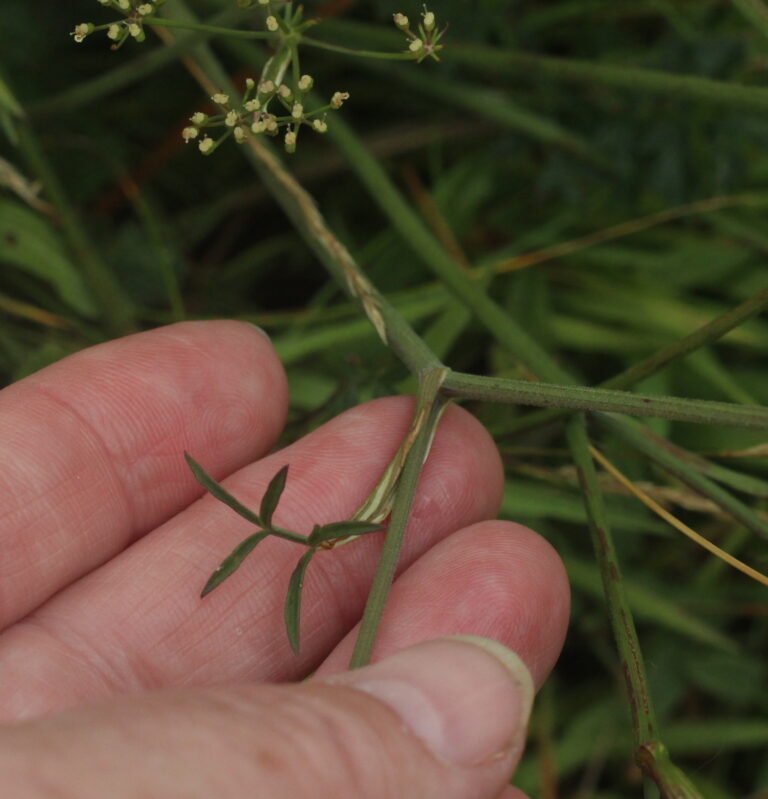
One of the prettiest plants was easily spotted along the north west diagonal path. Burnet saxifrage looks similar to Cow Parsley, but is smaller daintier and flowers later in the year. This one can be distinguished by the two different leaves, one looking very much like salad burnet!
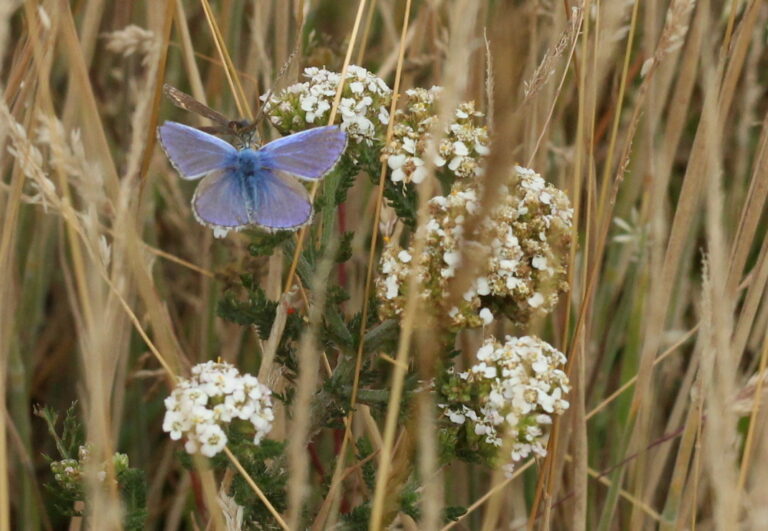
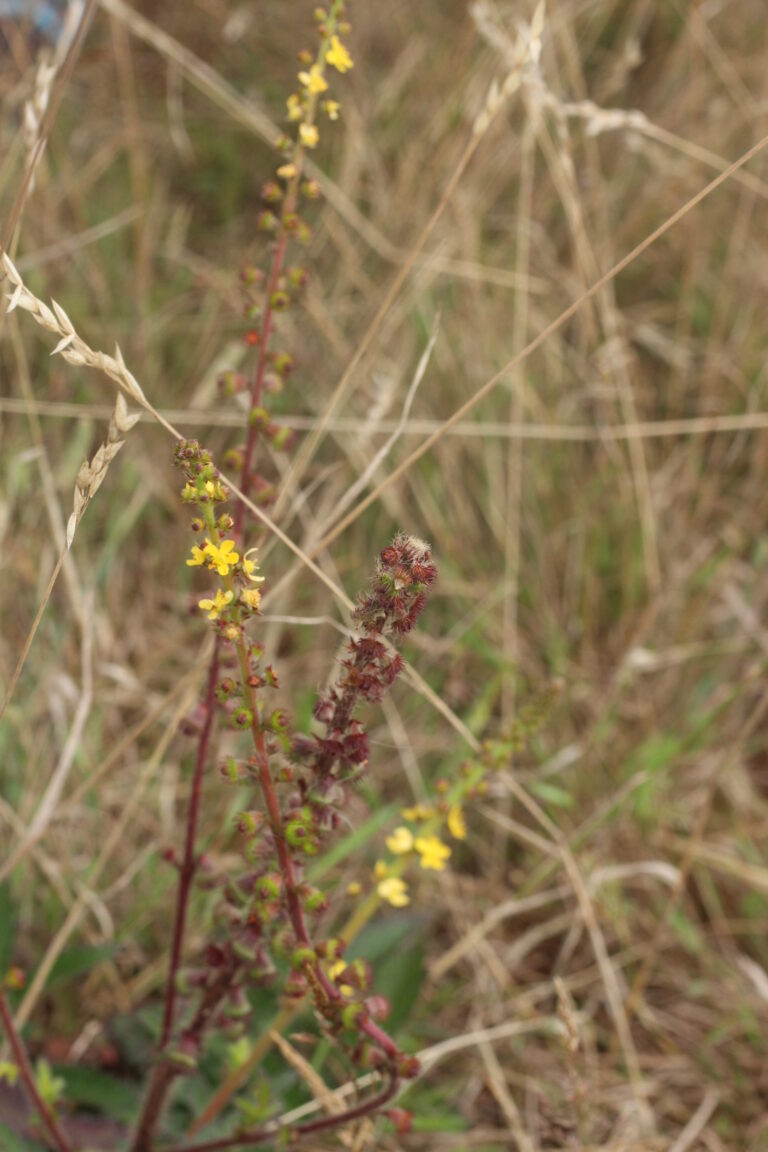
The south facing banks in the park have an abundance of typical chalk grassland plants, and are fantastic for wildlife. Great swathes of Ladies Bedstraw were joined this year by Scabious and Agrimony. Agrimony also has very barbed seed heads which do tend to attach themselves to people and dogs. This is probably how the seeds got here! Another bank was full of Yarrow which is great for pollinators and still had a little Wild Clary in flower. This salvia has seeds much loved by finches and sparrows
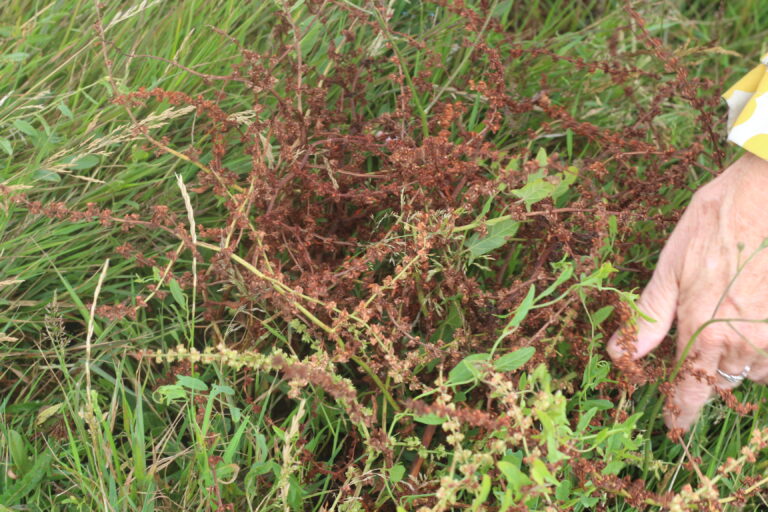
One that puzzled us for a while was a rather straggly looking plant that we thought was a dock, but did not have typical basal leaves. Close examination afterwards of the spiky little seedhead led us to conclude that it was actually Fiddledock. The fiddledock leaves (which were rather scarce) resemble violins, hence the names! Birds often feast on these seeds, and the wild area between the northern fence and the railway lines is always alive with birds and other wildlife!
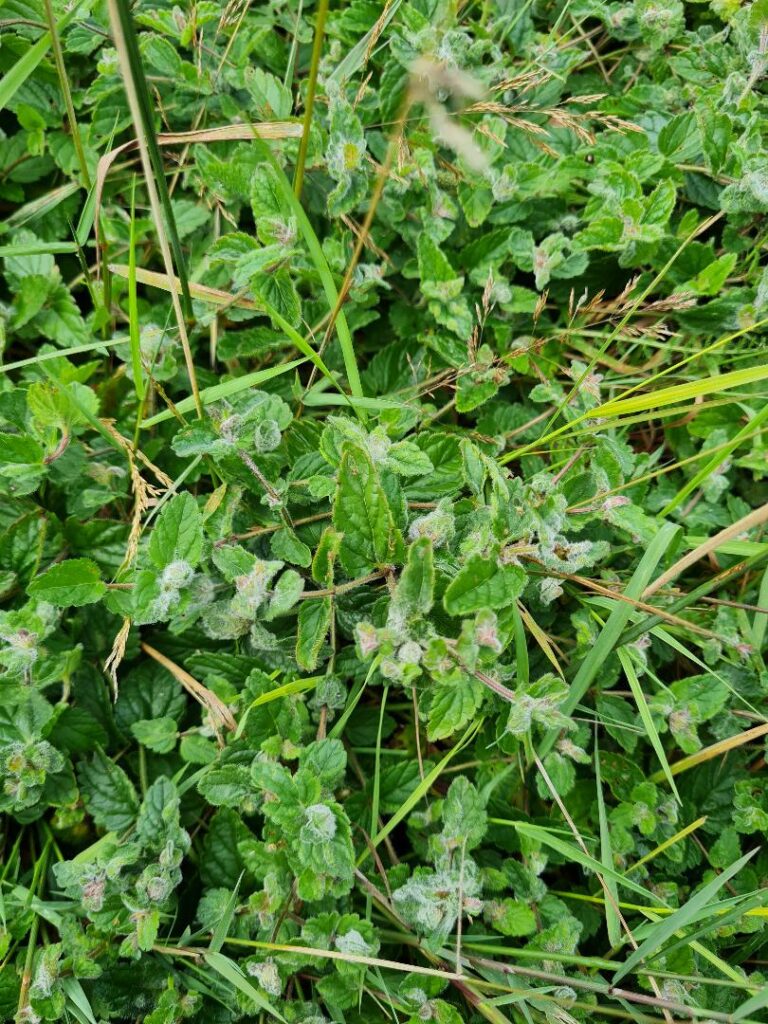
Another plant that was a bit of a puzzle seemed to have rather alien fluff balls instead of flowers! We think these Speedwell have been taken over by Germander speedwell gall. This is caused by a tiny orange bodied, long legged Gall Midge.
Did you see any other wildlife?
Birds, bees and bad behaviour..
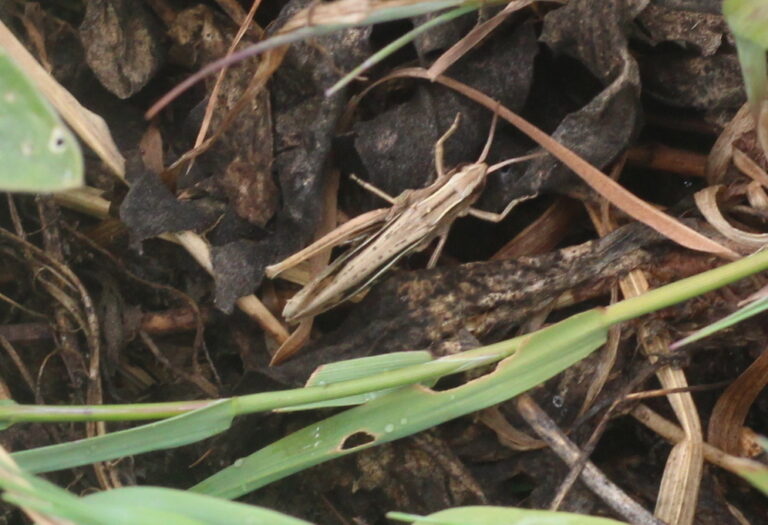
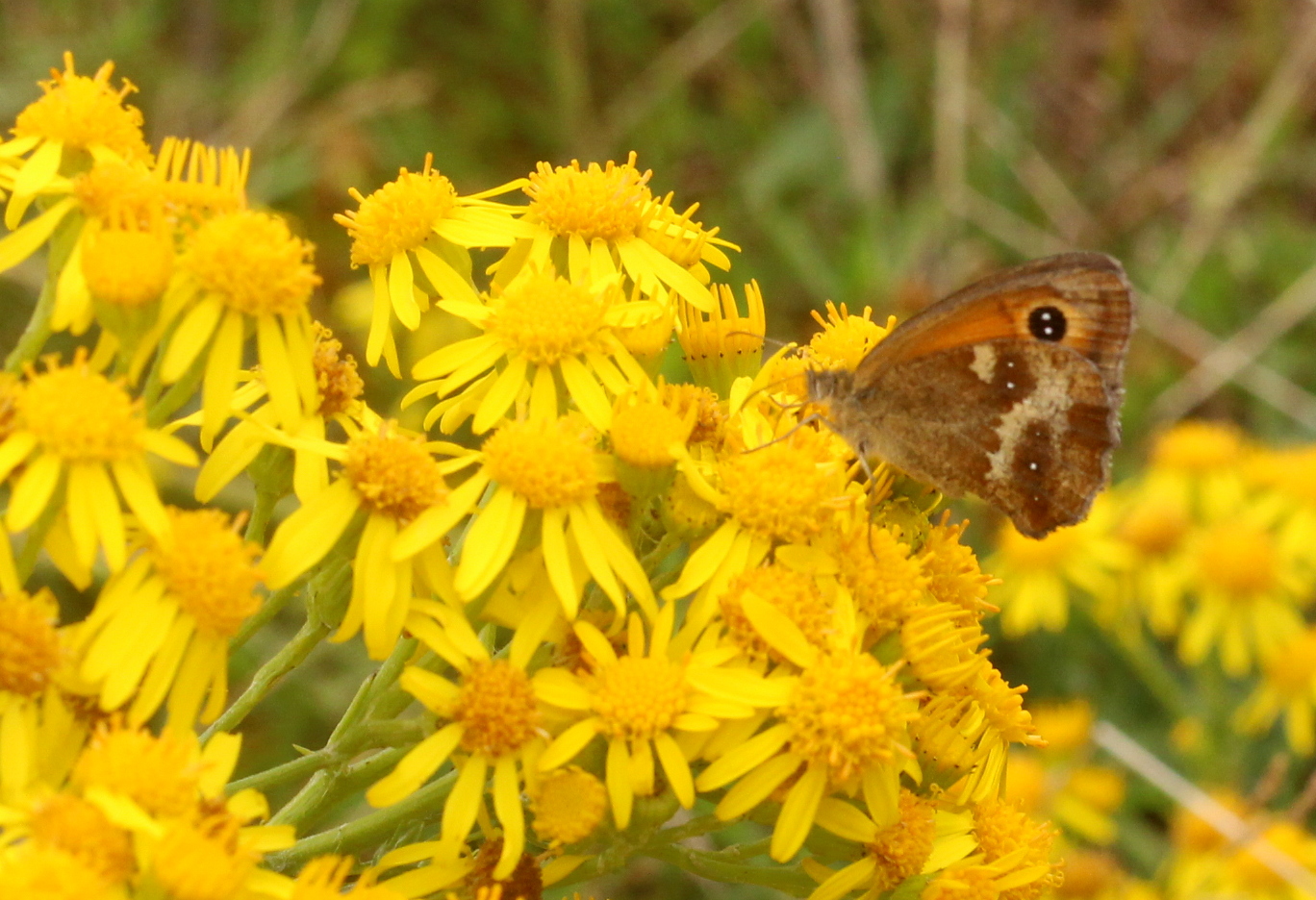
Yes! Despite the thunder and drizzle when we got there, the fields were alive, especially with grasshoppers hopping about. It was wonderful to see quite a few butterflies even though the sun wasn’t out. This included Meadow Brown, Gatekeeper, Common Blue, Large White , Six Spot Burnet Moth and some of the Small/Essex skippers. There were also bees and hoverflies and a few small moths.
We were less pleased to find quite a lot of litter, especially in the long grass where clearly the remains of a picnic were strewn about. Luckily we had a rubbish bag and gloves, so cleared as much away as we could. Apart from looking unsightly and unpleasant, litter can also cause a hazard to wildlife, and attract rats.
Thanks so much to our enthusiastic volunteers. We hope you enjoyed it as much as we did. We will now review the results and keep a dialogue going with the council about mowing regimes next year.
If you are interested in helping with surveys, please contact us. You can also sign up to the Renaturing Seaford mailing list to find out about events and volunteering opportunities in Seaford
Judy (Seaford Action for Nature)