Debbie suggests how keen botanists may find plants of interest even in the depths of winter!
New Year Plant count
The traditional view is that botany is not as interesting in the winter time, as many plants are not flowering. However, there are lots of activities that those who are interested in plants can do. Every year the Botanical Society of Britain and Ireland (BSBI) organises a New Year Plant Hunt over four days over the New Year period. This started off in 2012 as a fun idea dreamed up in a pub by two botanists, but now attracts thousands of individuals to look, over a three hour period, for plants in flower. Seaford had two group hunts this year and found more than 30 plants in flower. Quite amazing, given the frost and very cold weather preceding the New year. However, the top ‘score’ this year was 110 from Swanage!
Common ferns on walls
Another satisfying winter botany activity I enjoy is looking for ferns on walls. There are a small number of ferns that grow very happily on walls, taking their nutrients and moisture from mortar or any soil that settles in wall cavities. Ferns tend to be under-recorded in most areas, but once you get to know the six or seven species most likely to be encountered, you can find yourself spotting them while in towns, cities and villages. They tend to be more common on older walls, so hunting around the walls of a churchyard or the church itself may be a good location to start looking.
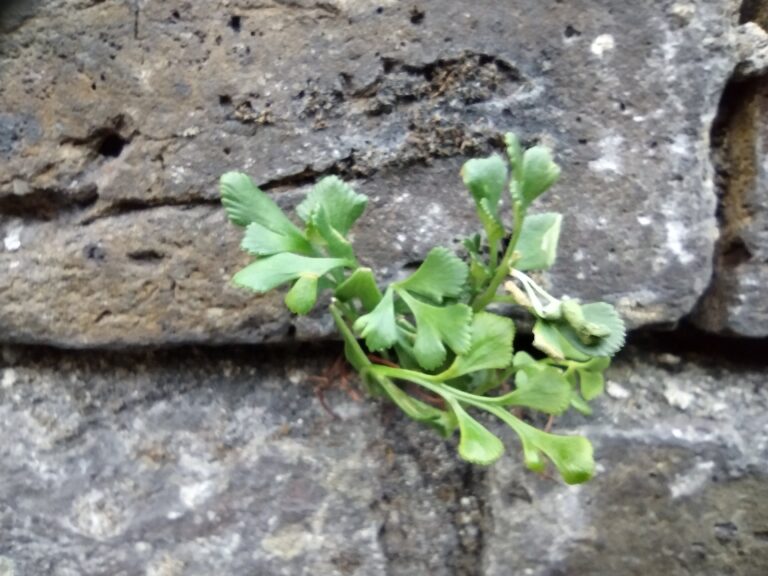
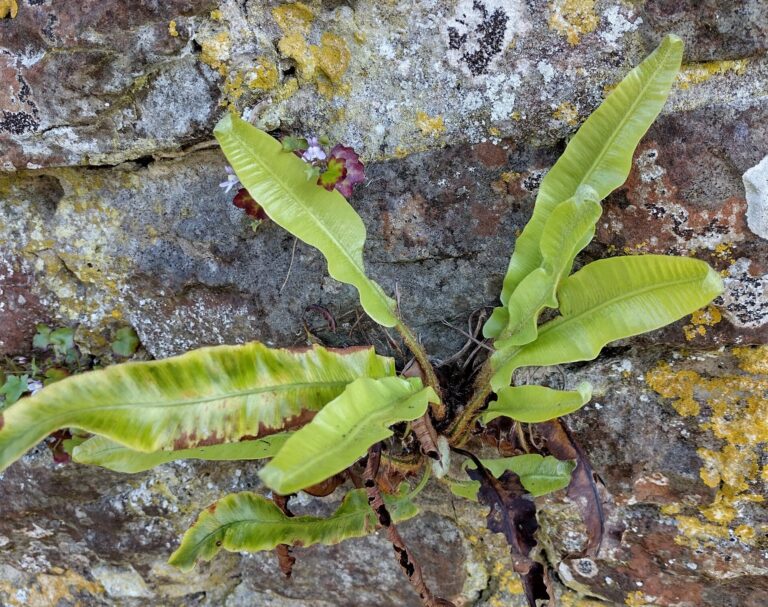
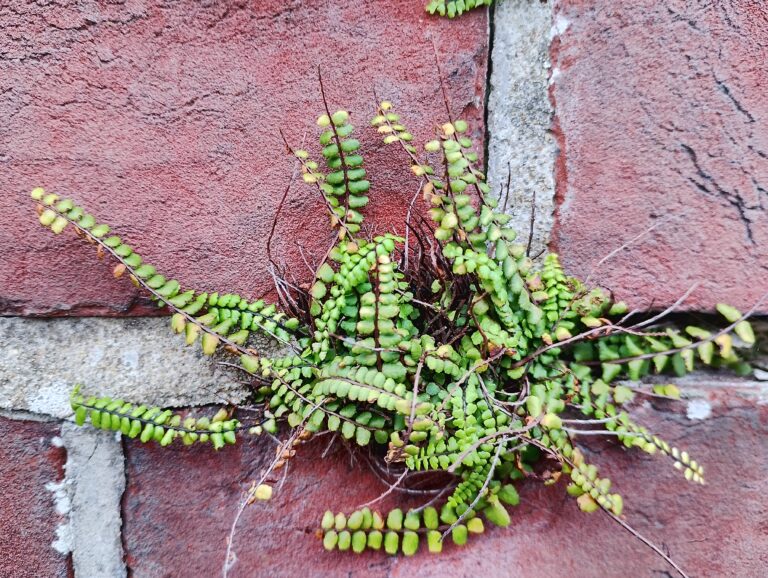
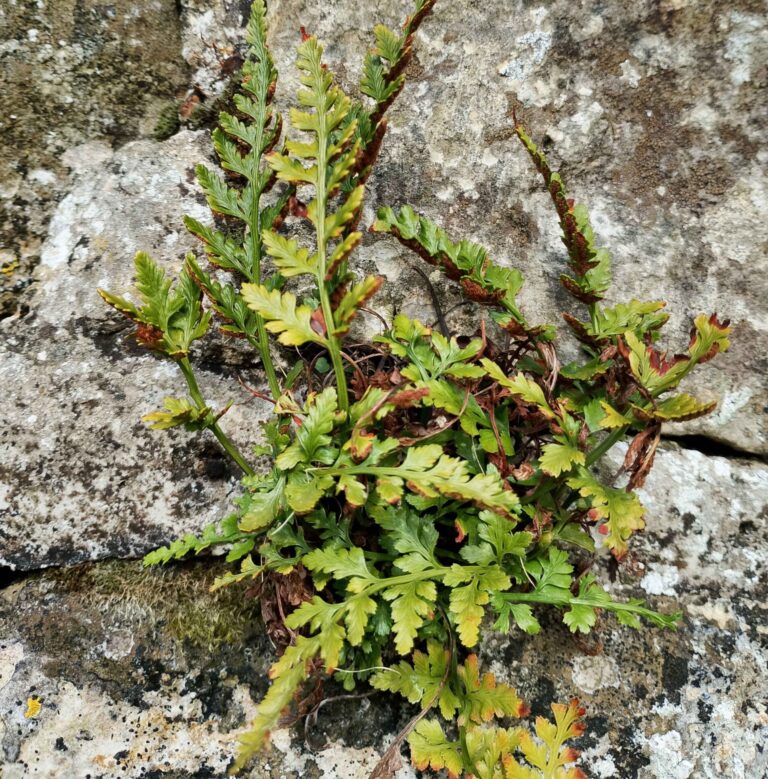
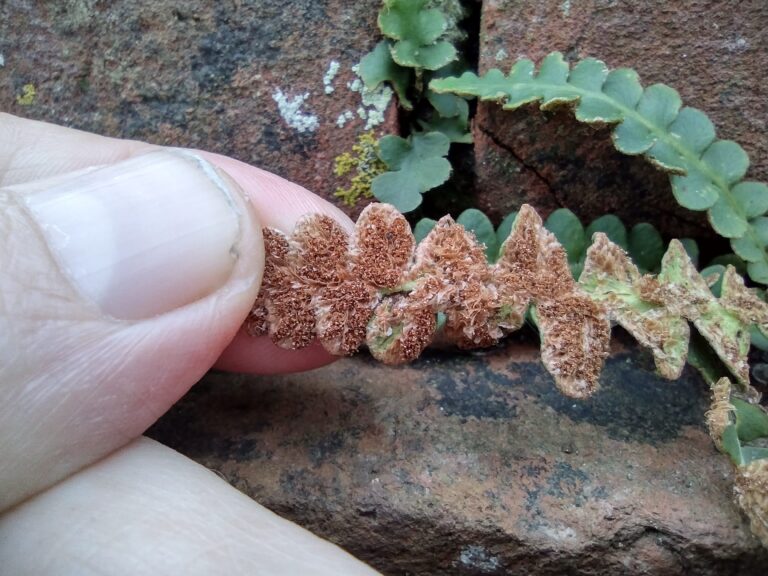
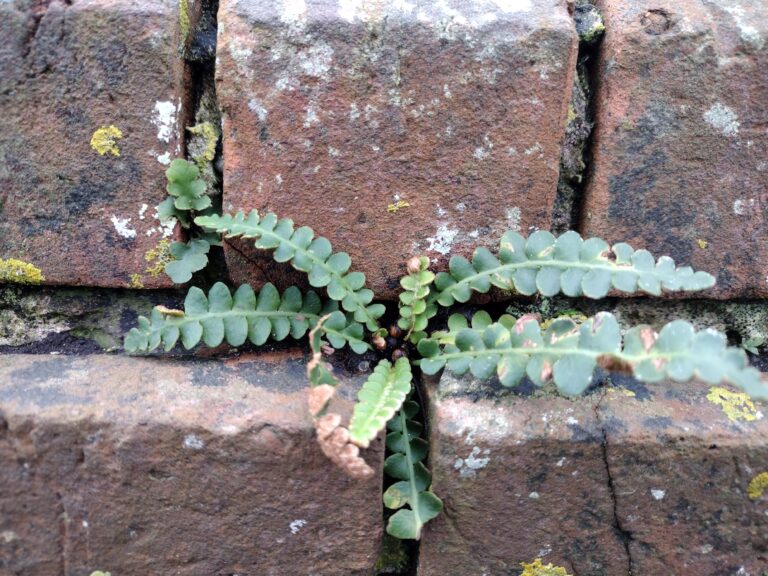
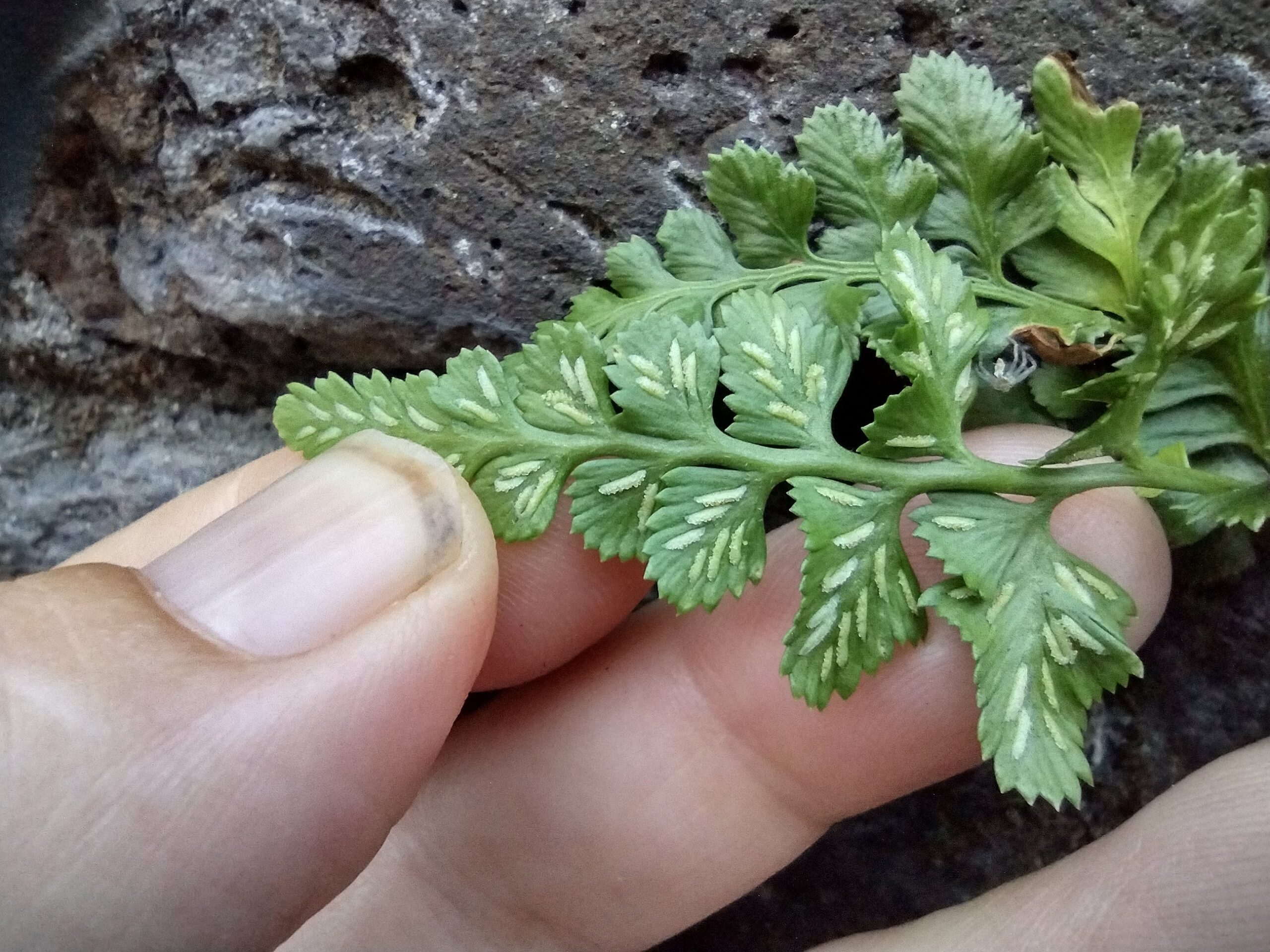
The most common fern on walls, in my experience, is Wall-rue (Asplenium ruta-muraria), followed by diminutive versions of Harts-tongue fern (Asplenium scolopendrium). You might be more familiar with Harts-tongue fern in woodlands or shady parts of hedgerows, but they also seem quite happy on walls, albeit as smaller plants. The third most common fern I have seen on walls is Maidenhair fern (Asplenium trichomanes) and the fourth is Black spleenwort (Asplenium adiantum-nigrum).
Polypodiums
Polypodiums are slightly larger ferns that are more common in woodlands, growing out of shady tree trunks, but also tend to thrive on damp parts of walls where gutters regularly leak. There are three main species of Polypodiums (Common, Southern and Intermediate) and require a microscope to split them. Neville Hutchinson, the Vice County recorder for East Sussex has requested they are recorded as Polypodium vulgare s.l. (sens lat.), unless you can confidently split them using microscopic analysis of their spores.
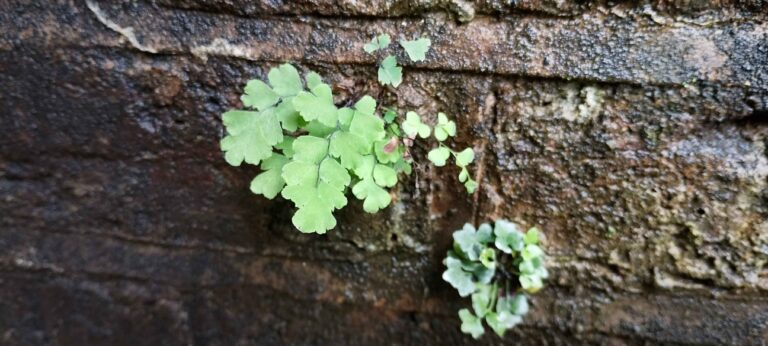
In addition to the more commonly found species of ferns, there are some more unusual ones, that only have a handful of known locations in Sussex. I was keen to follow up an old record of Rustyback fern (Asplenium ceterach) in Eastbourne last year and was pleased to rediscover it in the same road and that it was also on the wall of the next door property. Probably my most surprising fern-on-a-wall find so far in Sussex has been Maidenhair fern (Adiantum capillus-veneris), on a railway arch wall in Polegate. This is a species I have only ever seen associated with coastal locations, surviving in places with regular sea spray. That turned out to be a new location record for East Sussex!
Looking for ferns on walls is not confined to a winter activity as they are present all year round, but can be more visible with less foliage around them. So next time you have a few minutes to spare while out near walls, see if you can spot any ferns! The county recorders will be very pleased to receive your records on iRecord along with a photo.
Resources
There is a very good photo guide to most of the species I have mentioned on the Naturespot website – link below, or for those who prefer a more formal method, there is an excellent key developed by Brian Eversham from the Bedfordshire, Cambridgeshire and Northamptonshire Wildlife Trust – link below.
https://www.naturespot.org/WildlifeGuide/Ferns-on-walls
https://www.wildlifebcn.org/sites/default/files/2018-06/Ferns_on_walls%20v1.1%202002.pdf
Have fun with ferns!
Debbie Alston, Seaford Natural History Society