Did you know we live on the Planet of the Beetles?!
Beetles (which belong to the insect order Coleoptera, meaning sheath-winged) have lived on Earth since long before the age of the dinosaurs!
There are over 370,000 known species of beetle and they are found in every land and freshwater habitat in the world. Beetles typically use just their hind-wings for flying: the front pair are modified as hard wing-cases, which cover and protect the flight wings when the beetle is at rest.
In the UK alone there are over 4000 beetle species belonging to over 100 families.
Which of these have you seen in Seaford?
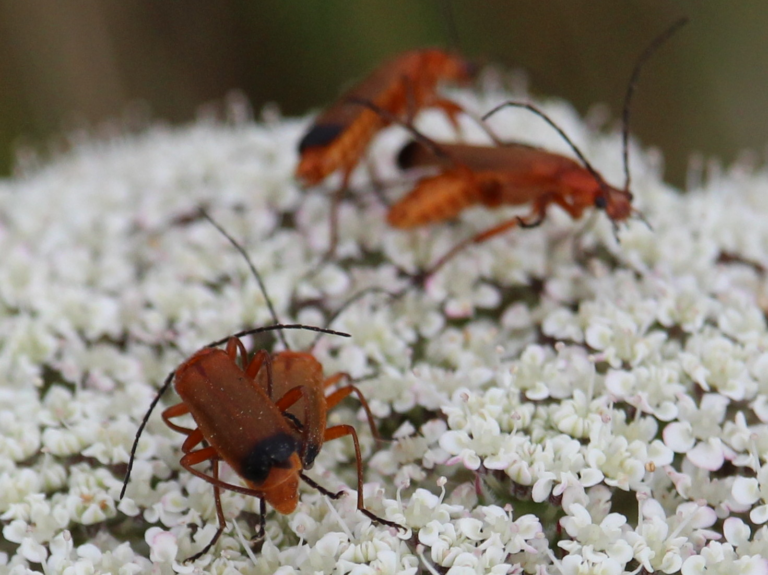
Soldier beetle
Cantharis pellucida – (family Cantharidae)
Soldier beetles are so-called because they are slender and straight, and often have red, black, blue or yellow colouring reminiscent of regimental uniforms. They sit on flowers, waiting for other flower-visiting insects on which they prey, but also feeding on pollen and nectar themselves.
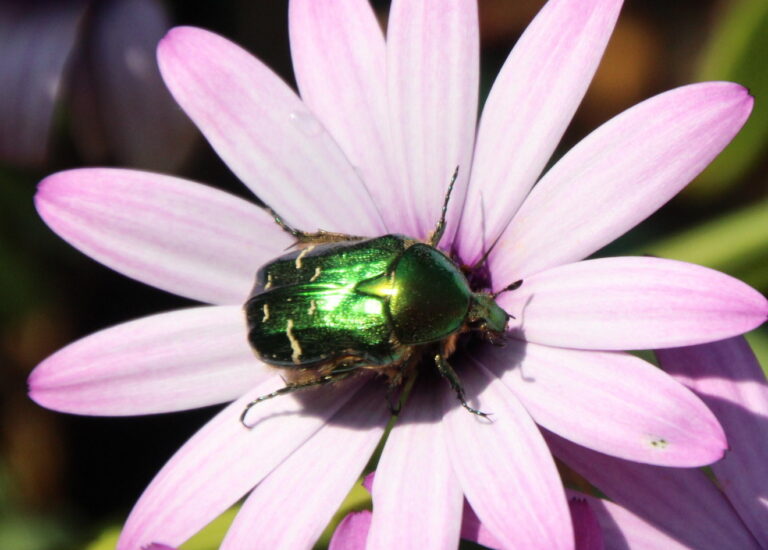
Rose Chafer BeetleCetonia aurata – (family Scarabaeidae)This typically metallic-green chafer is on the wing – rather noisily – in midsummer, and is usually seen feeding on flowers. The larvae live in decaying plant material such as compost, peat and rotten wood. |
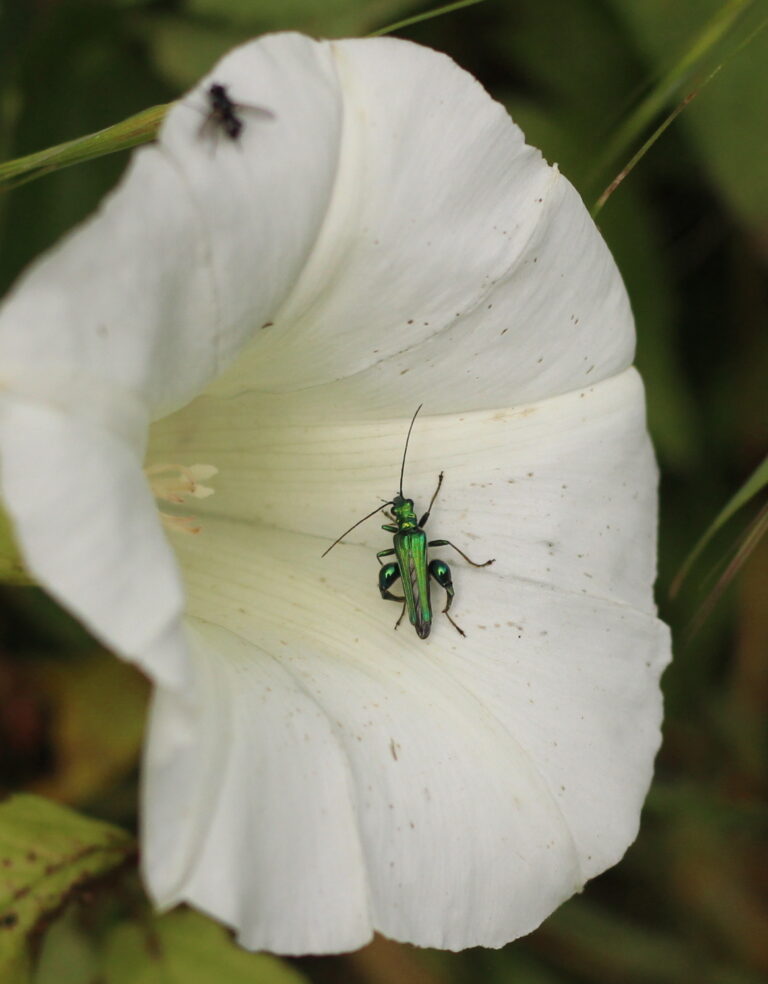
Thick-legged flower beetle
Oedemera nobilis – (family Oedemeridae)
This spectacular metallic-green beetle is usually seen on flowers. Only the male – seen here – has the characteristic thickened hind ‘thighs’ (femora). This species is common in gardens and grassland, and in open spaces in woods, in the south. The larvae feed and develop within the plant stem
More about insects
You can find out more about the fascinating world of insects on the website of the Royal Entomological Society and Buglife
There are some great Insect Week resources for children available here
Quick Quiz
Just for fun – a quick quiz for you.. which of these are beetles?)
- Glow worms?
- 7 Spot ladybird
- The Sycophant
- Maybug
Answers to follow at the end of Insect week.
If you spot any insects, don’t forget to record these on Irecord, so that your important sighting can be part of the Seaford Biodiversity Project!