
We’re moving into Autumn, and a good time to think about what to plant, or move, assuming that next summer will be another hot, dry one.
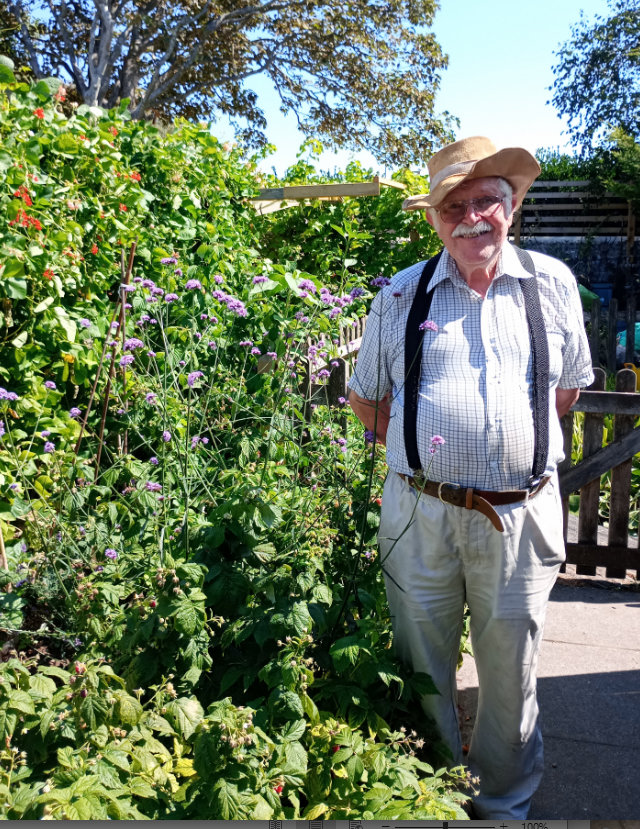
Drought tolerant perennial plants may well survive without watering next summer, once they are established now. So fill any spaces you have with Perovskia, lavender, rosemary, hedge germander, bearded iris, Verbena bonariensis (all blues and purples), Santolina, fennel, daylilies, (yellows and oranges) sedums (red), Oenothera lindheimeri (pink/white) and salvias (in a range of colours).
Try those Mediterranean herbs and prairie grasses you admired on holiday. Grey-leaved plants are particularly resilient. We have all these growing in our ‘no watering’ beds, so we usually have them for sale too.
They are appreciated by bees and other insects, but do sow several pots, or beds, of native wildflower seed, like the beds in the Crouch Gardens, and include a container that provides a source of shallow water.
Move your ornamental pots close to a water source, like near the kitchen door, so that you can easily re-use the washing up water. Plant bulbs, tubers and corms in the spring as they have their own reserves built-in: scarlet Gladioli and orange Crocosmia look very dramatic.
Stock up on mulch. In the spring, after a good shower of rain, mulch the soil around your plants with shredded prunings, or bark, or compost, or gravel or slates. This reduces evaporation.
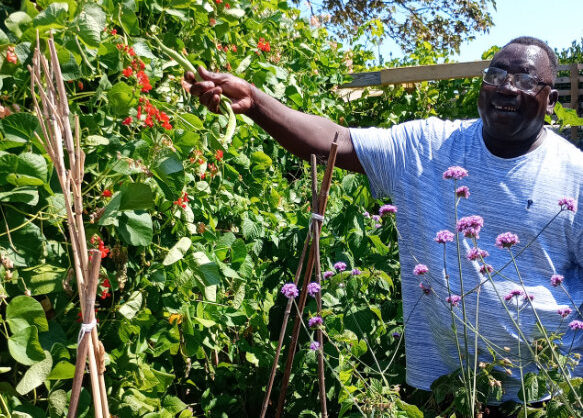
Look in vegetable catalogues for goodies that love the heat: sweetcorn, sweet potatoes, aubergines, peppers, courgettes and cucumbers. In our vegetable plots, behind the blue door in the Crouch Gardens, we use leaky drip hoses, on a timer. This is an economical and effective way of watering, so is permitted even during hosepipe bans. When planting, make a little ‘moat’ around the plant so that every drop of water is caught.
We have volunteers with experience of living in Spain, eSwatini, Zimbabwe, Malawi, Dubai and Sudan – all hot places!
Do come and visit us on Wednesdays throughout the year, 9.30 am -12.30.
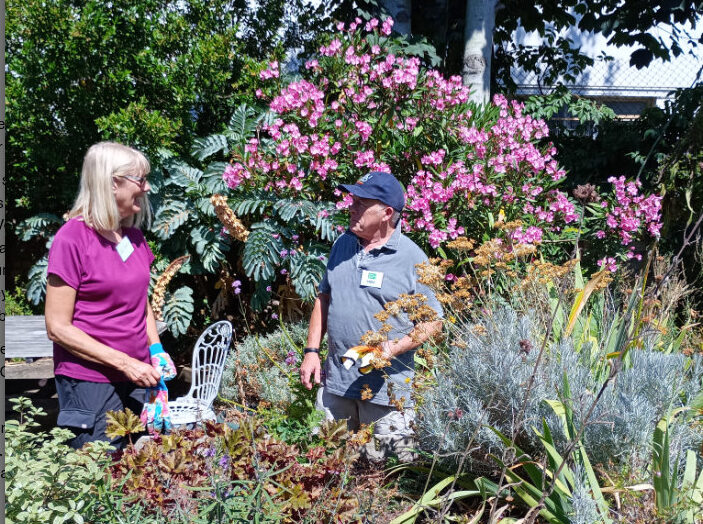
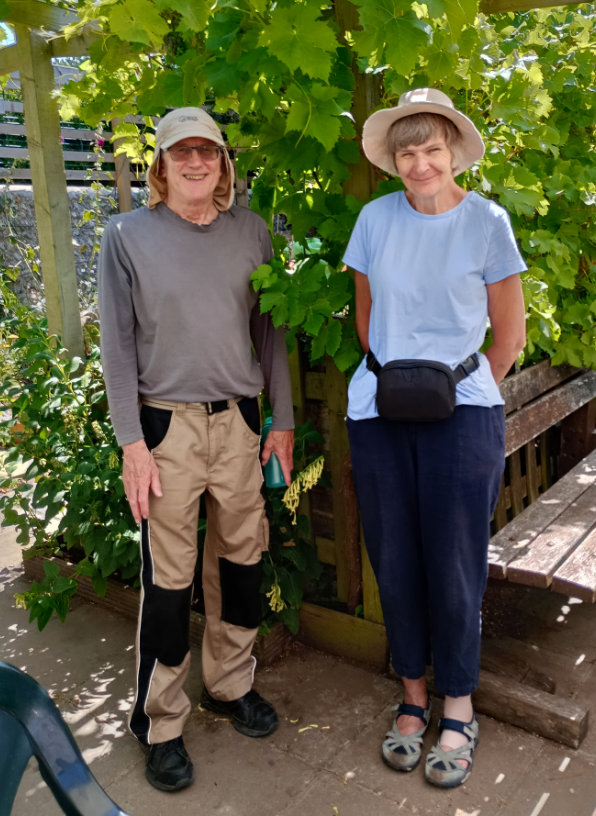
Leigh and Steve in front of the Oleander