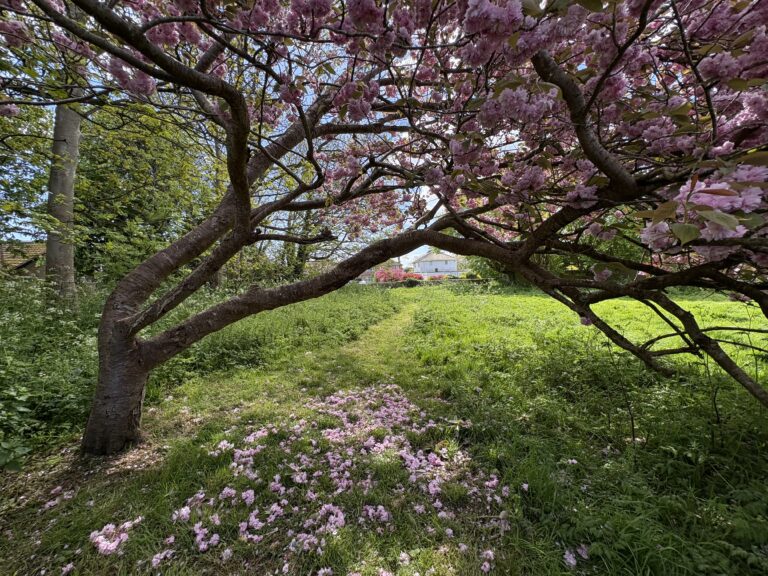
Since we first started surveying here, new footpaths have been opened from Sandore Road and Blue Haze avenue into what used to be Newlands school grounds, and is now the Bellway estate of Seaford Grange.
It’s unfortunate that there is only one entrance to this green space, which is tucked away in Millfield close but never the less it is a precious little habitat.
We visited on 25 March and found evidence of 36 species which brings the total to date to 71 which includes some grasses and trees.
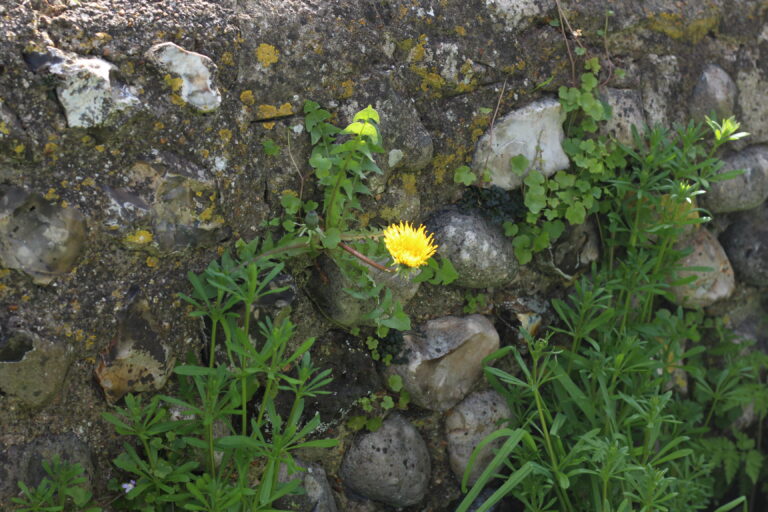
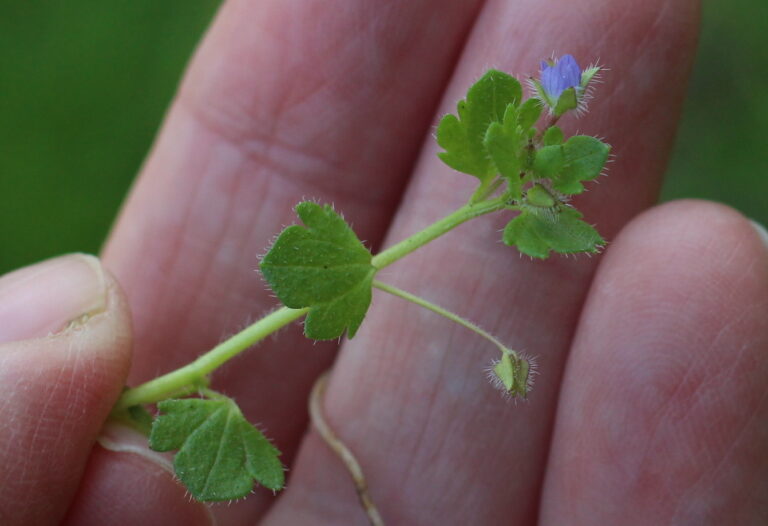
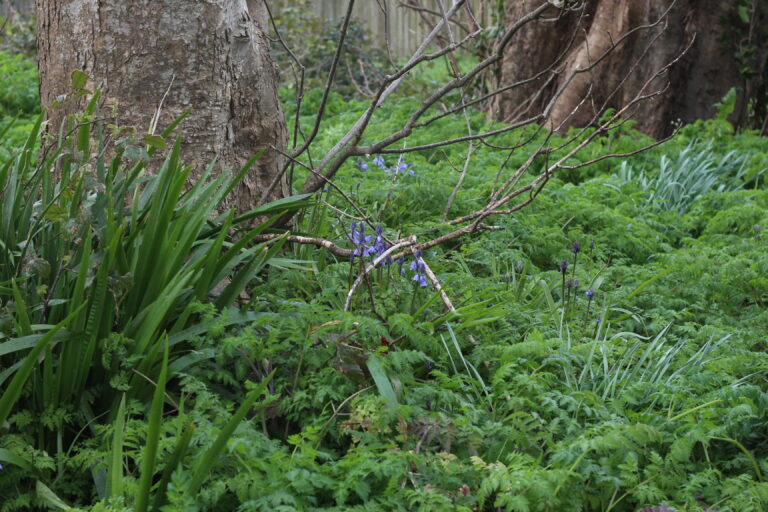
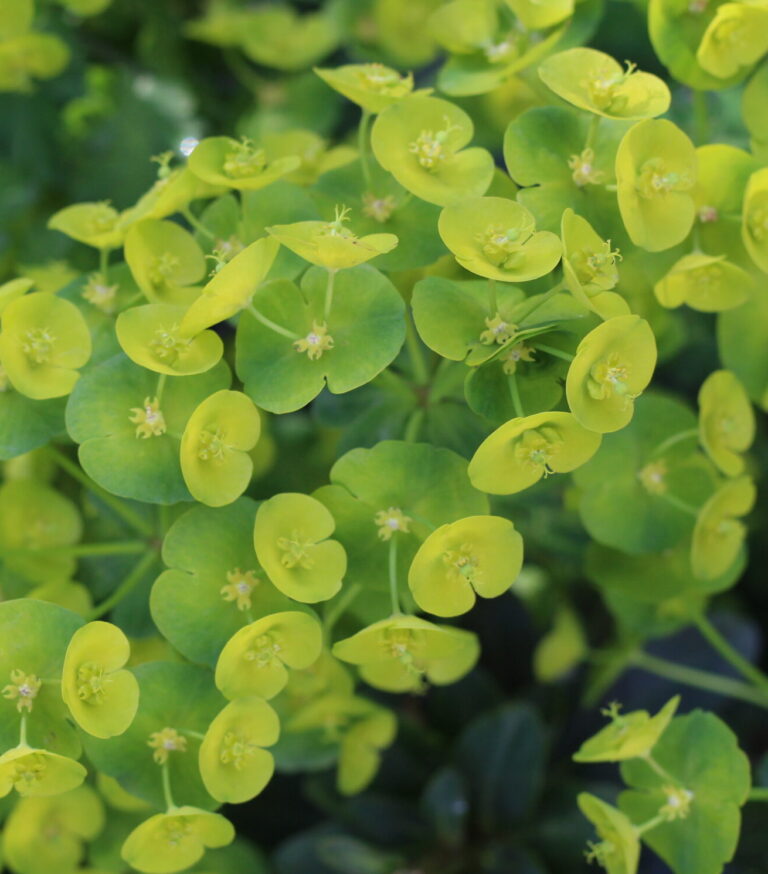
As expected there were Bluebells in the woodland area, primroses in the hedge and cow parsley starting to raise its pretty umbels. Other Spring flowers included Lesser celandine, Red dead nettle and Ground ivy all valuable plants for pollinators. Some smaller common plants were spotted for the first time too, including Daisy, Ivy-leaved speedwell, Wavy Bittercress and Petty spurge.
If you live near this lovely spot, we would love to hear from you with any plant or wildlife sightings, and to see any photos taken.
Update 20 April 2026
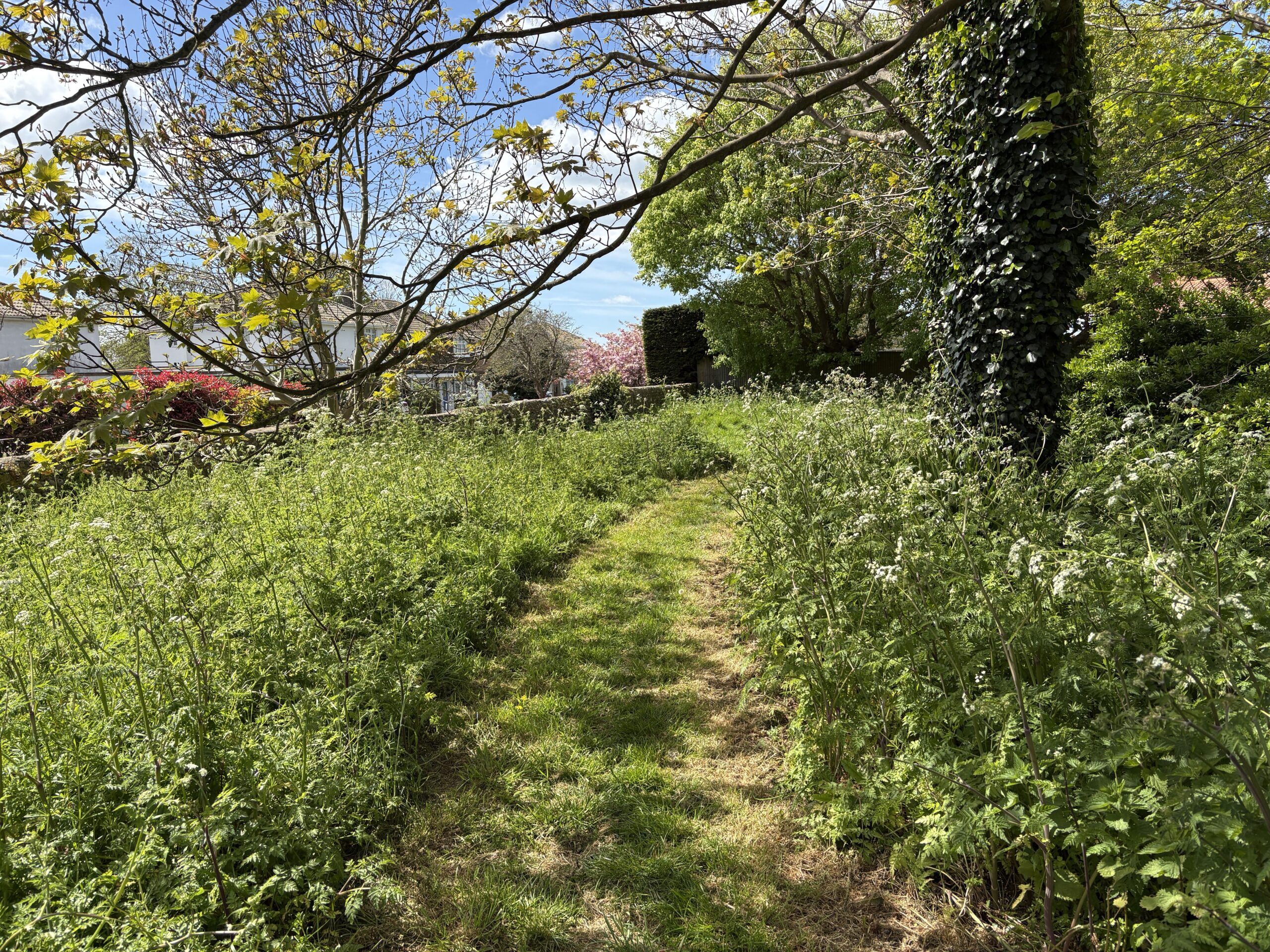
I took a walk back here the following month to see if the new council contractors had started their grounds management. I was impressed that a sensible 1-2m path had been mowed from the entrance making the wood easy to access. In the main meadow area, another path had been mowed in a loop round, which made it easier to access some of the hedgerow areas than at our previous visits. There was still plenty of space for the meadow to grow and I look forward to going back in the Summer to see what is in bloom. There were already a few bees and butterflies flitting around the blossom, perfectly lovely.
We will give feedback to Seaford Town Council who manage this space, and pass the sightings onto Seaford Natural History Society who are coordinating a whole town nature survey.
Judy (Seaford Action for nature)
safn@renaturingseaford.org
The full list on this date was:
Bluebells (hybrid) | Hyacinthoides massartiana |
Bramble | Rubus fruiticosus |
Broad-leaved dock | Rumex obtusifolius |
Cleavers (goosegrass) | Galium aparine |
Clustered Dock | Rumex conglomoratus |
Common Nettle | Urtica dioica |
Common sorrel | Rumex acetosa |
Cow parsley | Anthriscus sylvestris |
Creeping thistle | Cirsium arvense |
Cyclamen (garden escape) | cyclaman sp |
Daffodils | Narcissus sp |
Daisy | Bellis perennis |
Dandelion | Taraxicum officianlis agg. |
Dovesfoot cranesbill | Geranium molle |
Greater plantain | Plantago major |
Ground ivy | Glechoma hederacea |
Hogweed | Heracleum sphondylium |
Honeysuckle | Lonicera periclymenum |
Italian Lords and ladies | Arum italicum |
Ivy | Hedera helix sp |
Ivy-leaved speedwell | Veronica hederfolia |
Ivy-leaved toadflax | Cymbalaria muralis |
Lesser Celendine | Ficaria verna |
Lord’s and ladies (Cuckoo pint) | Arum maculatum |
Periwinkle (garden escape?) | Vinca major |
Petty spurge | Euphorbia peplus |
Primrose | Primula vulgaris |
Red dead nettle | Lamium purpureum |
Ribwort plantain | Plantago lanceolata |
Smooth Sow thistle | Sonchus oleraceus |
Stinking iris | Iris foetidissima |
Three-cornered leek | Allium triquetrum |
Wavy bitter-cress | Cardamine flexuosa |
Wood avens (Herb Bennet) | Geum urbanum |
Wood dock | Rumex sanguineus |
Wood Spurge | Euphorbia amygdaloides |
Seaford Action for Nature